Stableminded · · 53 min
Two Decades in Finance Led Brian Mehler to Stable, the Paymentchain That Runs on USDT
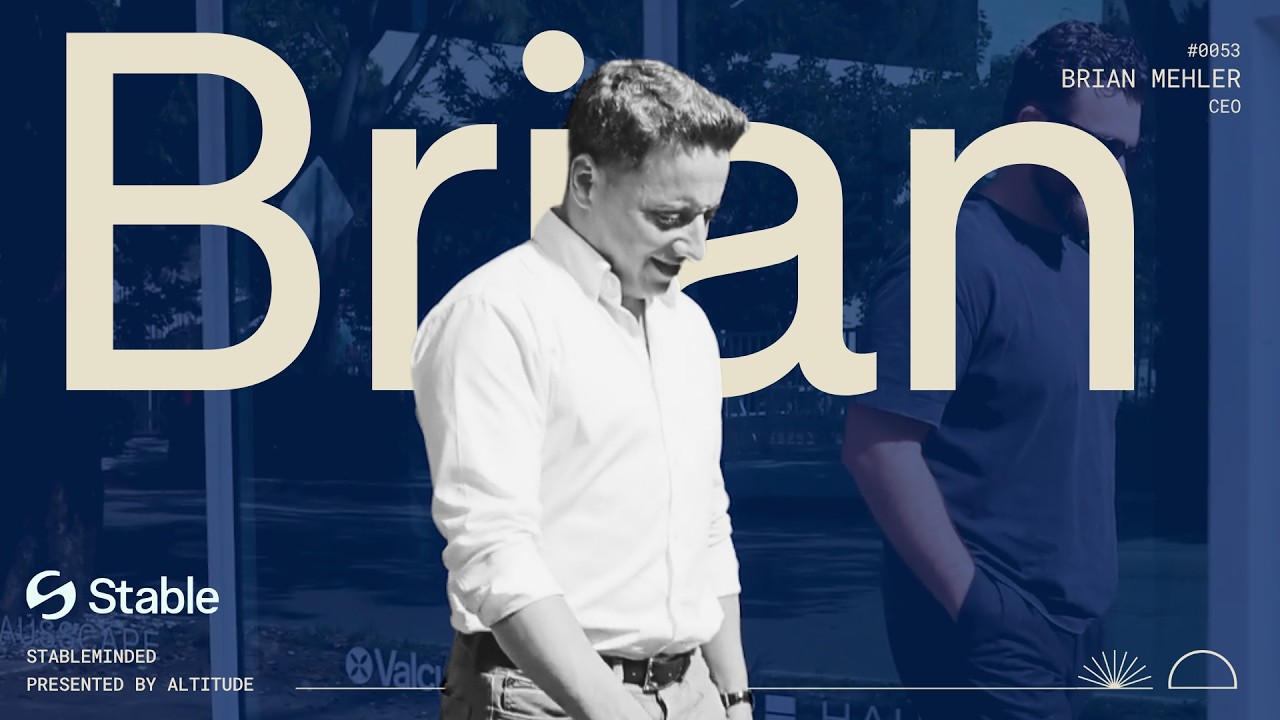
Brian Mehler
In this podcast interview with host Drew Rogers, Brian Mehler of Stable discusses the company's payments-focused, EVM-compatible layer one blockchain, which uses USDT as its native gas token to enable sub-second finality and low-cost transactions. Mehler recounts his finance career, including running Block.one's EOS VC fund (roughly $1 billion, with investments in Securitize and Galaxy Digital) from 2018, before joining Stable in August 2024. He describes Stable's relationship with the Tether ecosystem (with Bitfinex on the cap table and backers including PayPal Ventures and Franklin Templeton), positioning it as a chain-agnostic alternative to incubated competitors like Circle's Arc and Stripe's Tempo. The conversation covers use cases such as correspondent banking, trade finance, and cross-border payroll, plus Stable's three-pronged strategy (retail app, developers, enterprises) and partnerships for privacy (Aztec) and wallet infrastructure (Dynamic).
Transcript
62 turns, about 11400 words. Straight from the recording, so it reads like speech.
Brian Mehler
guest0:00
Crypto has all these promises, but there's always a a hidden asterisk. We have a very strong mission of removing those asterisks. Stable's a layer one blockchain, EVM compatible, that's focused on payments. We remove a lot of complications by getting rid of a volatile gas token. Instead, we use USDT as native gas. 80% of market of stable coins is USDT. If you're moving money across borders in half a second and it's done and that they have that money, it's not waiting to be confirmed.
It's in their account, and they can send it back out. That's the velocity of money that is never talked about in traditional finance. They know that they're losing points on every transaction and they're like, how can you solve this for me? It's a lot of showing rather than telling and we do a lot of that mission of like showing it works.

Drew Rogers
host0:47
Hey. It's Drew. Quick thank you to Altitude for making this episode possible. Altitude is rebuilding business banking for teams on the frontier. They offer the full stack for the modern CFO and founder, a beautifully designed platform for payouts, bill pay, corporate cards, enterprise controls, and so much more. Move money with speed, yield, and total control all from your stablecoin balance. Operate at Altitude. If your business is on the frontier, your finances should be too. You can learn more at altitude.xyz.
Brian, thanks for being here. Crazy week. We're in Miami. We got a lot of stuff to do, so thanks for making time. Thanks for having me. Stable minded.
Brian Mehler
guest1:22
How are you? Pretty good. It's been a busy week. A lot of travel to get here, but it's it was it's worth it. Yeah. I think I'm excited to get to know the business, get to know you.
Drew Rogers
host1:32
And maybe the best way to do that to start is just to understand how you approach a day like today. You are at a conference with a lot of things to do, a lot of people to meet. How are you approaching your your day right now? Like, how you who do you wanna be talking to?
Brian Mehler
guest1:49
And then how does that kind of bring us into the world of stable and what you're building? Yeah. Definitely. You know, the planning to go into this week, started a few months ago, and it was, you know, you have to start figuring out, as you mentioned, like who you're gonna meet with. A lot of it has to do with like existing partners and like that's more of a a social meetup and talk, which, you know, takes over a lot of the time at night. But then during the day, it's really about getting down to some business.
So there's a lot of people that you've had like those passing conversations with and it's time to actually like grab ten minutes, get them to kind of like put something down and you're gonna make a schedule with them. So I live overseas and so with that, it's kind of like a miss in and out. So I'm not on this side of the world anymore. Previously I was in New York and it's kind of not as easy to like grab coffee as I normally would. So it's a lot of a lot of coffees today. And you know, it's been fun.
I would say the growth in The US lately in terms of like stablecoins has definitely increased the center of attention or like where things are coalescing around. And so, it was good. I would say this was a very helpful conference for us to attend. Cool.
Drew Rogers
host2:52
Okay. So you you were in New York, you're now not. Where are you based currently? Sure. Dubai. So I went I've done a, you know, a curious career. I started off in Chicago, then New York, Hong Kong, and now Dubai. So it's been a bit of a journey. What's the best place you've lived if you had to pick one? And and like the work was maybe untied. Like, it's completely unrelated to work and capital just like the place itself.
Brian Mehler
guest3:17
Yeah. I mean, I think Hong Kong is like very captivating. Hong Kong is like a very exciting place. I kind of joke that it's like a college town for adults. Like, you walk everywhere. You get to have, you know, you walk outside, you rent all the people you work with or your friends with, and it's very casual. New York was also great as well, and then Dubai is a very easy life. So I think they've done a very good job of building a it's very easy. It's easy to get around. The flights can take you anywhere in the world.
So it's, they're all different. But I I do miss Hong Kong and New York a lot. Yeah. What is the thread of your career that has brought you to these places? What have you been spending your career doing? So I've been in finance, for the past twenty years. And I think the thread that like connects me to them is that I'm not afraid to say yes to like a unexpected opportunity. And that was really what got me from, New York to Hong Kong. I got, approached to work for Block one.
You know, they created things like bullish, but to run their venture capital program back in 2018. And that was a, yes on a whim. I was still based in The US, and they had me out there for a while. And then had a very fun weekend with the team and the CEO and everything like that. And they were like, do you wanna move here? And it was kind of like on the spot in front of people you've been friends with for a few weeks and kinda didn't wanna miss out on the fun and the journey.
So said yes, and then lived in Hong Kong. Wow. Yeah. Was this to go build out the venture arm of that company in that market? They're they're based in that market, I'm assuming. And, was did they have a venture group before? Or did you start that from scratch? No. I was the first hire. It was an idea that the team had. They'd performed really well with their token sale at the start and had earmarked a portion of that money, that came out to be about a billion dollars that there was earmarked for a venture fund.
And they needed someone to kind of organize it, put it together, get it launched and that was me. And, so it's fun. We were very successful. We rolled out, you know, a satellite fund system. We made direct investments and with that, we were able to back some of like the larger players out there, but we got to work with teams at Galaxy and the investments that were made include things like Securitize. It's been some pretty good successes.
And, that was again just like saying yes and taking an opportunity that was presented. Oh my gosh. So you walk in, you have a billion dollars of capital that you need to go deploy. This was what what year roughly was this? This started in 2018. Okay. So we're kind of in the, like, winter of that or or no. Pre winter, but, like, how how long was this chapter for you as as you were deploying there? We deployed about three years. Okay.
So saw, like, the rise and the peaks of things, and then there was a couple of bobbles before,
Drew Rogers
host5:46
the crypto winter hit in. But, you know, we had our heads down. It was it's very good, very Perfect time to be investing in the category. Yeah. I mean, so many of the companies that are now, like you mentioned, like Securitize and others, you know, getting the spotlight, but probably were building everything in that moment. Yeah. So what what other ones are you proud of from that season? You have Securitize.
Brian Mehler
guest6:07
Yeah. There, there's there's like smaller ones like a company called, like, AlphaPoint. Like, not all exist today. Some of them, those team members have gone on some pretty impressive things. And I think one of the things that's been really fun for me is like getting reintroduced to those teams now, like getting back into crypto, working at stable. I've been pretty fortunate to like have like a pretty deep Rolodex that came from those investments and companies we backed.
We have actually people on our team, you know, recruited through that process. So I would say like the EOS VC fund like had pretty a pretty wide remit, and it also had, like, a very wide reach. So I'd say, like, proud of it all. Examples, like, Galaxy was an investment we made. So Galaxy Digital was we participate in the RTO, and, obviously, that's done exceptionally well. So that was a direct investment. And so I'd say we we had a pretty good mix, and it's pretty good. That's a good one. What were you looking for
Drew Rogers
host6:57
into the business at Stable? What that transition was like? And really, what made you wanna bet your career on this and what, yeah, what what you're building now transitioning?
Brian Mehler
guest7:08
Yeah. So I would say, like, sitting in the venture seat, like, when you're making those investments, while you are providing sometimes a lifeline, sometimes, you know, the the strategic help that's necessary for these startups, it is a complicated relationship because you are taking a piece. And so making sure that, like, there's an alignment between the understandings of, like, what you're gaining from that investment. Sometimes teams view you as, you know, trying to understand, like, what your intentions are.
Like, are you trying to make a quick buck? Are you really there to support them? And I think a lot of investors always say, yes. I'm here to support you. Like, I never wanna sell. But, you know, there is an exit always. And so I'd say we were I've always been good at, like, trying to be honest and direct and, like, level with them.
But, so with that progress going from after leaving Block one, I ran a venture fund for a family office, which was, you know, after the years of Block one and ESPC was a lot of work, it was a very nice departure from that. And like being a small team, getting to work very one on one was nice for me to kind of like reset and refocus like how I focus on the investment cycle and what the exits we wanted to look like were, rather than having a large team that's kind of working at all cylinders.
And that's when the opportunity to join the stable team came up and it was, obviously, like a I saw from like myself of like a friction that exists in the market. Like, I use crypto to like pay for invoices and, you know, I believe very much like eating your own dog food. And I'm not sure that's always done in the crypto world. Like a lot of investors talk about investing in like top line coins, but they're not actually using anything.
But having used stable coins myself, I know the friction of like, you get transferred something to a wallet, you have to get the other token, but then it's lot you know, all these like little frustrations that just add up. And it's like, is this is this actually better? And I think that was a gap in the market.
And so when the Stable team asked me to join, was kind of a it was definitely a change, like getting back into that, you know, startup mode and like building rather than investing where it's like every day is focused on like this project was was a big change. But I think it's been exciting. It's been definitely invigorating since joining last year and getting to see things like our our the token launch and the chain go live in December was was a big milestone. It felt it felt pretty great.
When did you formally join the business? I joined in August of last year, and the team had existed for in the year before. Yeah.
Drew Rogers
host9:27
How do you you're meeting someone at Consensus today. How are you describing stable? Like, how do you how do you make people in 60 understand what you're doing? Sure. You know, on the technical side, say, like, know, stable is a layer one blockchain,
Brian Mehler
guest9:40
EVIM compatible that's focused on payments. We remove a lot of complications by getting rid of a volatile gas token. Instead, we use USDT as native gas. You know, 80% of the market is of stablecoins is USDT, so it's readily available and accessible. And from there, you're able to move crypto on chain effectively, efficiently, things like sub second finality, thousands of transactions per second. And, you know, you're paying your fees in the currency that you're moving. So just an easier way of moving money. Yeah.
Drew Rogers
host10:13
This has been like a really interesting last six, twelve months. We've seen a lot of these stable chains rise and at least from our vantage point, because we're covering this space. There seems to be a lot of focus on solving this problem. Like, how how are you going to attack it, the chain itself? And there's so many different approaches that we've seen. Like, you have what Stripe is doing with Tempo. You have Circle and Arc doing what they're doing.
This seems really interesting where, like, Tethr and what they have is so distributed and so well, like, still absolutely dominating. Help us understand the relationship there and the advantage of that relationship and how it might be different or similar to other stable chains. I feel like that's
Brian Mehler
guest10:52
a helpful place to frame as we kick off. Yeah. So I would say kind of going back to like a problem in the market and no one was addressing it. The current system or the previous system, let's say, before we launched was that there is not a great experience. That's supported by the idea of like you mentioned, like the players who are coming into the space. They wouldn't be entering this market if they didn't see that there was not just something to disrupt, but there was something to improve.
No one's gonna get their hands dirty building something for not a lot of effect. So the same mission that we're trying to tackle, others are also working on improving, where it's, you know, a general purpose chain is expensive, it can be slow, it can get congested. And those are things that make this whole promise of like using blockchain to solve all the problems of traditional finance. If you aren't presenting a fully better product, you're not gonna get the adoption.
You're not gonna get those people to move over. And that's where we really position ourselves as like not just saying we're solving the problems, but implementing things that make the old way of doing things like unpalatable. You're not gonna go back. If you're moving money across borders in half a second and it's done and that they have that money, it's not waiting to be confirmed. It's in their account and they can send it back out. That's the velocity of money that is never talked about in traditional finance.
That is never a conversation you hear from, you know, traditional rails because it's not really in their value prop. That's not how they make money. They make money on the the the spreads and the weights for the deliverables. That's what we're changing. And so right now, if you wanna move money, whether it's peer to peer or for institution or pay, it's in the account instantly, and they can send it right back out. And that's why you're seeing that adoption.
So I would say stablecoins are really getting their moment to shine. And the crypto industry as a whole is really focusing in on that because it is a real problem solve that's taking place rather than a hypothetical idea. This is you can implement it today. And part of it was required with stable was to build it from the ground up.
So we went, built the chain from the ground up, designing it to make sure that it had the scale necessary, but also could like approach those traditional rails and compete one on one, if not better. And the relationship between this and Tether, where does that come in and what are the advantages there that you guys have with that? Yeah. Definitely.
As I mentioned, like, we have a great cap table, whether it's PayPal Ventures or Franklin Templeton, but we're also fortunate to have Bifenex on our cap table, part of the Tether ecosystem. And Paula sits an adviser to our company. And that conversations we have with those teams is really about how do we spread the mission of Tether, which is like accessible stablecoins worldwide.
We're fortunate enough to also have like other partnerships with the Tether ecosystem, whether it's their hadron product for for minting and for tokenization, where we see that there's great value for on chain assets. And so we feel there's a multi touch points that we work with them. But their whole mission was like, how do you increase the speed, lower the cost, and provide a better product? And that was a kind of our mission for our go to market strategy. Yeah.
This is me just trying to understand the differences. Like, I see something like Arc and Circle, and then I see something like this. What do you find is similar? What do you find is different?
Drew Rogers
host13:57
What are the advantages? Because Stable is a separate entity. It's you're independent. There are obviously these, like, strategic involvements, but seems like you guys are kind of you're on your own, and you're you're building your destiny. And that's like a mutually beneficial thing for the entire Tethr ecosystem versus something like ARC or other things that are like almost like incubated projects or incubated teams. What is the benefit or downside of these two differences?
Brian Mehler
guest14:25
And do you think that that's something that was like an intentional choice by Tether to go do it this way? Or do you think maybe other types of companies like Stable could exist in the Tether ecosystem as well? Like, are you guys kind of the only game in town in this? Do think you that's gonna exist? I'm asking you too many questions. But No. It's good. I'm just like, we're we're living we're kind of writing the book as we go here, and I just would love your thoughts on this. Yeah.
So I would say, you know, looking at the other players in the space, I would say like as you mentioned, like the incubation, like an in house product that's being incubated is really focusing on their ecosystem or their product mix. So that I'd say is a limiting factor of those. Like it could be the most performative and the best success out there, but it is gonna be limited. Like, there is a a focus that's always gonna exist in an incubator product, which is not a downside. It's just the reality of that.
So if they're being built internally for a company, they're gonna be focusing on that company's success and growth. And I think that's the differentiation between stables that we are agnostic. So regardless of what token you want, whether it's through an OFT, it comes on to our chain or native minted on our chain, you're allowed to move those tokens and it's a free market and open landscape. So I think the blue sky that exists from stable is desirable for a lot of products, and it's also the distribution of it.
So the decentralization that's there allows for, like, a greater comfort level where you don't have to worry about a certain interest or a certain player making a change for themselves. We support everything we wanna grow overall. Like, I wanna use USDC, PYUSD,
Drew Rogers
host15:55
USDG, these, like, other things, that's something that the platform either today or will be able to host. It's not a Tether only platform. Right. So as I mentioned, like, we were fortunate to get that investment from PayPal Ventures. And with that, PYUSD
Brian Mehler
guest16:09
is on our chain. So, you know, the OFT platform, you can work, transact, and, you know, that was an exciting thing for us, like being a layer one, getting access to those tokens really helps, like, spread the adoption and the growth of that. So again, that's kind of us, like, showing, like, our mission is, like, to be the growth central of stablecoin payments and being partners with people like PYUSD, you know, a Genius compliant token was really centered to that mission. Yeah. So incubation
Drew Rogers
host16:35
is kind of limiting in some ways, both from, like, incentives and focus, but customer, I can get that. I feel like last week specifically, and we're starting to see more of the tempo Stripe go to market customers kind of popping up where it seems like that existing distribution is obviously to their advantage, and they're able to get in front of a lot of really scaled high volume businesses and brands because of that and almost on day one habit. That would be, I guess, the counterargument to that to that point.
How do you how do you you know, you've you've been spending a lot of time at this conference. You got you're talking to a ton of people. When you're thinking about your customers and who you're wanting to serve most on this, you're you mentioned, like, the collapsing of incentives and float and some of the stuff. Is are those the kind of businesses that you're targeting? And how are you thinking about who you approach with Mhmm. When you're building the building the distribution on the customer side? Yeah.
I would say, you know, to your like, first part of your question,
Brian Mehler
guest17:37
we while someone may be considered like a competitor or a competing chain, we don't see that as like something we're not going to approach. We actually want to have that interoperability. That actually, again, is like you want this to scale, you want this to become the new way that people are using assets on chain or like moving fiat to on chain, you have to have that interconnection. So we actually see it as, a benefit to have the more opportunities, the more growth.
That if you have, you know, let's say, a traditional company that is not tech advanced, not someone that you would ever imagine to be using crypto, but they came on through one of those incubated products, and now they're on crypto, then that gets them larger exposure. That's the rising tide lifts all boats mentality. And that's what we're excited for, and I think that we we know that those partners, we consider them partners, not just competitors. We actually see them as like, we have to do things together.
And, so a lot of collaboration, a lot of talks go on. Yeah. What's the happy path for that sort of collaboration? Like what what is the ideal recipe
Drew Rogers
host18:34
or way that these types of parties can actually because I think what you're saying, and I agree, is like, at the end of the day, we want more people to be using things like stablecoins. We want these systems to be updated, and we want more people coming on chain regardless of where that needs to happen first. But what is that combined better outcome that these parties can do together in your mind? Yeah.
Brian Mehler
guest18:55
I would say, like, the key part of that is you will eventually using blockchain technology or using crypto without being aware of it. That's how these pieces all work together. And I think the unique part about blockchain or the crypto space is that it gets a lot of attention on, like, the, like, say, tribalism, like which team you're on or which token or which chain gets a lot of attention. But in the real world, like right now when you send money, you know, you do a wire, you have no idea.
You have not a clue what a beneficiary bank account is. You have no idea who the intermediary is. You just know you pay the fees. Yeah. And you're handling risk compliance. Yeah. And you have no idea. But for some reason, you know, we're held to different standard, which I appreciate. Like, you know, it's the security's there. The transparency is available because you have that security.
So I'd say the way it will work and like the way this all works together is that you're gonna be fundamentally ripping out, you know, traditional tech that doesn't work for the consumer, and it's gonna be replaced with these new rails. And that's what we want to be a part of. That's the product that we're putting to market. And with that, it's really just it's a lot of work.
I think we are kind of like a tipping point of things going to the next level, but it's gonna be exciting to see how the next, like, let's say, twelve, eighteen months go. Yeah. What is driving that tipping point when you think about it? Like, what does that mean? Yeah. I mean, I would say easy way to measure, gets a lot of conversations is, obviously, with the GeniusX starting off, you're able to see things like Tether bringing out USAT. You know, that's a Genius compliant token. PYOSDs, Genius compliant.
And so with that, you're able to see the very quick adoption. I would say we were surprised. We knew it was gonna be definitely an attention getter, but we were definitely surprised by how quickly those companies that had never you would never imagine, like, wanting to dabble in crypto or use it to fix a part of the ecosystem was broken, how quickly they reached out and called.
And, you know, these are some publicly listed companies, you know, companies that are like name hold brands that have a problem with, you know, whether it's trade finance or with their payments or their invoicing systems that they need to move faster, because they know that they're losing points on every transaction. And they're like, how can you solve this for me? So we do a lot of, we have to wear obviously a number of different hats, but our BD team does a lot of like scoping out.
We've had to build out other parts or a dev team to help do the those integrations and the onboarding because it's too hard to tell one of these large companies, you now need to build out your entire crypto arm for this product. Rather, it's easier for us to build out a really strong SDK that has the ability to scale and give that resource that we were able to share those resources and have, our dev relation engineers go work one on one and help with that onboarding. So that's been the most exciting part.
And excited for those to come out. I think as regulation continues to grow, whether it's in The US, you know, next will be up with be Clarity. But as you saw with whether it's, the Hong Kong standard ordinance for stablecoins or you see in Japan. Once those regulations come in, there is a very big rush. Because people have been wanting to do this, but they're not gonna be the first no one wants to the first step in the water. They're waiting for that jurisdiction regulations to come in. It's exciting. When
Drew Rogers
host22:00
when you think about really really two parts here, the use cases here that with the collapsing of the relationship between settlement time now being within a couple seconds, you mentioned the economics that are now so many companies for so long have extracted value in that float or in that delay, which now with something like stable goes into just like a couple seconds. What companies right now that you're talking to are most excited about that?
What what companies are you finding are benefited most or have been damaged most by this historic system that you think you're most not most excited to serve? I know there's many different kinds. But what are some of these use cases that pop up that you're like, yeah, they've been screwed for decades and like, this is really really valuable to them. Who what kind of companies? Yeah. I would I mean, I can think of like two of them.
Brian Mehler
guest22:52
I would say like corresponding banking in terms of like the financial ecosystem is corresponding banking has historically been a complex, slow moving beast. You know, you need to sync up those funds whether it's domestically between the banks or internationally, and it's a it's a lot of work. And there's a lot of mistakes that happen. So an example, if you're using a traditional payment network, you don't know where your money sits over the weekend, which is a kind of curious thing. Sorry to cut you off.
Just to define this term, correspondent banking.
Drew Rogers
host23:21
Define that in the world of banking and that specific type. Sure.
Brian Mehler
guest23:25
So let's say a small example. You have a let's say a smaller, country that, you know, has a very tight regulator. The corresponding banking when funds are received at one bank and another bank has, let's say, payouts withdrawals that are for a customer's account there. How do you how do you level set that at the end of the day? How do you balance the books? They're not gonna physically move the trucks back and forth, but rather bank a has a payout of $500,000,000 to bank b. But bank b owes them $400,000,000.
So that's settling at the end of the night of how do you confirm that you on paper transferred $405,101 hundreds owed at the end of that balance is a very rudimentary explanation of corresponding banking. But you're not actually moving the funds. It's basically memos. And there's a memo system between the banks of saying the IOUs and the receivables and kind of balancing that out. But the problem with that is someone has to keep track of it. It's a lot of human error.
It's a very time tedious process not to just implement it, but also to audit it. And so the systems exist today, but it's still, as I've mentioned, a lot of auditing, double checking. If you look at not corresponding banking, but you look at the, you know, let's say the the buy and the sell side of equity traders or debt traders, they always have to have a two week compliance. Where at the end of that two week process, they have to not be at work, which is costly.
Like, you know, the bank who's employing their whole team in two weeks a year, they're not trading and doing their job because they have to go through an audit check. That audit check gets removed in crypto because you can constantly audit in real time. You have access to the data. It's confirmed rather than having to tediously go through all their trades and double check. So so two weeks of the year, you're saying, like Oh, yeah. All the party stops because we have to actually see if we if we're on the money. Yeah.
You get you get I mean, this isn't like a me thing. It's, in The US, they require, if you sit on a certain equity desk and you have a certain position, you get a two week compliance check where you get effectively a holiday. It's part of your comp package, but you Okay. You you take a a little little break.
Drew Rogers
host25:26
And with that, they're just going through making sure everything is aligned and copacetic of how you worked. Because there's so many, like, different parts and and delays, and you kind of have to stop everything to, like, let the settlements finally rest. Is that why? Yeah. It's making sure there was no
Brian Mehler
guest25:41
curious work being done. How do you how who were you talking to, and what's it done? I think kind of example, I don't wanna get like too into specifics, but there was a very unique situation of off the book accounting for a trading firm out of The UK years and years ago, and a lot of rules were written to make sure that doesn't happen again. There was another account there.
But, yeah, people in the space like know some of these trades that have taken place, but when you have something on chain that's instantly audible, you don't have to worry about that anymore. Yeah.
Drew Rogers
host26:07
So you have correspondent banking. Any other, like, use cases Yeah. That that seem really, yeah, really, really top of mind for you? I touched on that a little bit. Whether it's, trade finance or, you know, like,
Brian Mehler
guest26:18
a more lower example in terms of, like, number of transactions would be, like, payroll. So the odd thing now is that the complications of doing payroll because it's not uncommon to have a distributed team or a global team, if you're trying to run payroll out of The US, but you have members that are in Australia or Asia or even Europe, there's different holidays exist.
And the tough thing is that it's really hard for that end user, that receiver to say to their whether it's their landlord or whatever bill, oh, like, I know it's a holiday here. My my pay is coming next week, but no one's gonna keep a calendar of all the holidays worldwide. And so as I was talking about with, like, the settlements over the weekends, is that if you're sending a payment end of day Friday, you know, whatever account team here is sending those payments out.
If you send it through traditional means, it's not gonna arrive until Monday when those banks open in other jurisdictions. But let's say it's a holiday on that Monday in in Australia. You're sending from New York to Australia, and it's a holiday there. Well, money's then not gonna arrive until Tuesday. But obviously, there's a backlog. So it's like end of Tuesday that they receive the money, and it may be deposited, but not settled. So And they really can't withdraw their money until Wednesday.
So you just wasted more than a week. And to that end user, to that end employee, it's really hard for them to like go to the gas station, like, like I'm getting paid. It's still coming. It's, you know, those IOUs don't really pay for anything. So versus this, can instantly send, instantly withdraw,
Drew Rogers
host27:43
and that solves it for a fraction of the cost. So with payroll well, actually, I wanna dive into payroll, but real quick on trade finance. You wanna break that down? Yeah. So an example is you have a,
Brian Mehler
guest27:56
you a have company that like works in the fishing market, and they need to source all this fish from different places in South America, and it's being sold in Europe, for example. So you have different time zones and different markets, different currencies. And with that trade finance, if they wanna you get paid on delivery. But the fisherman isn't gonna go out to market unless they get, let's say, a deposit. So where does the money sit? The buyer doesn't wanna pay that money until they get their fish.
So how do you incentivize or how do you pay for them to rent the boat, get the gas, get the crew, because those are upfront expenses. So trade finance is a third party will step in and basically buy the IOUs or those incoming invoices and hold those, the receivables from that, but put out the money first. But you're taking a clip. That So trade finance gets very expensive depending on the scale, depending on the risk profile. And with that, you really want to have an easier way.
So you can use a stable coin with an escrow system, you know, just like in the real world escrow where you can have a little bit more where you can whether you put the deposit or you put something else, collateral, however you want to do it, you then have the ability to work peer to peer rather than intermediaries taking a cut. It's really interesting.
Drew Rogers
host29:04
So many different businesses that you could apply that to. So whether it's trade finance, payroll, like, what would the practical next step be? It sounds like you have an SDK. There's also, I'm assuming, like a dashboard or something that's like no code out of the box. How do most of these types of customers or maybe we take those two examples, like, what would be the next step?
Is there a payroll, like, feature within this dashboard, or would this be something that they could just go build with within their payroll system? Are you selling this to the payroll types of platforms out there? Like, who's the customer type, I guess? I mean, first, I have to wonder if, like, someone from my team, like, leaked our roadmap. But, no. That's, you're you're on the mark for a lot of that. We obviously, our SDKs and our APIs we build out are for,
Brian Mehler
guest29:48
making it approachable and accessible. So that's like any good chain would have that same toolkit where, you know, developer doesn't need to reinvent the wheel every time. These are the standard practices for an EVM compatible chain that they can just open out of the box, implement it, whether it's turning up an RPC or getting some of the basic, functions online for them. But I would say we kind of focus on a three pronged approach. We have, like, the retail consumer that's not a builder.
That's someone who wants to move money easily and effectively. So we have our, stable pay app that's rolling out, later this month, And that is for peer to peer transfers between you and me. With that, it would be gasless. Meaning that there's no fee to move that money between each other on chain and it's instantaneous, again, hitting that sub second finality. And then you would have, like, in the far other spectrum would be the institutional or the enterprise client.
And that's where they usually have their own dev team, and we work hand in hand with them to, like, help scope things out, help build. And then in the middle is like the the the solo dev or the the startup team. And we do reach out for them, trying to participate in some hackathons to help kind of scale that business model for us. And those are people who are just interested in coding.
Obviously, we definitely geared a lot of our docs and our SDK to being agentic friendly, not just only for agentic builders and AI coders, but also for agentic payments. So able to integrate like an x four zero two component very easily on chain. That's other things we focus on is how people can approach new or novel business ideas
Drew Rogers
host31:16
on chain with, a lot of ease and speed. Interesting. So you you have those are those are interesting ways to, like, go build the ecosystem, like the retail side, the developer side, and then those those are all three very unique, maybe similar in the in the tech rails that are under the hood, but, like, the go to market or, like, positioning is really unique where the retail has the app, the developer wants the tools, and then the institutions just want it to work.
And they they want it to be compliant and, like, all these things. Is there an order or a strategy to as you it's exciting that you're rolling some of these things out in the near future, like, being able to bundle or or package these things up? Like, how do you think about building an ecosystem around this? Or are there specific, are these gonna feel kind of separate by nature? Or does it is it gonna feel more like a unified
Brian Mehler
guest32:06
thing in your mind? You know, it's, it's a conversation we have a lot in terms of, like, how do we how do we build all three of those at the same time? And there is synergies across them. So a lot of the conversations we have with the enterprise clients gives us insights of like what the pain points they're experiencing or how they do the work. So I come from a financial background, as I mentioned, and I understand the compliance component having worked in SEC fund, regulated fund.
And I understand that there are certain components, whether it's the IDs or the KYC or the AML, that needs to be done at a certain stage. So having the experience of working it and understanding that those things exist, not being an expert in it myself, but rather working with those teams, those enterprise clients, compliance teams, risk departments. We understand how they would like it structured. And then listen we do a lot of listening.
And then we go to another enterprise client, do the same conversation, and we're able to, like, marry up where those alignments are. So we can then take that. Obviously, we help build those, let's say, white labeled products or, you know, a custom integration for them. We do that and then and that's technically their own launch. They're gonna own that IP. They're gonna develop that.
But what we glean from those conversations is then built in for that middle of road, which is like those solo developers or those startup teams, where we're able to take those tools that they will eventually need, bake them into whether it's an SDK or sample code for them to then use. It's been audited. It's been tested. We're able to give them a lot more security that they normally may not be able to implement themselves or undertake themselves.
And we do that heavy lifting, provide those tool sets for them, and they're able to build a lot faster. So and obviously, we're gonna bake that into our retail side for like our mobile apps and stuff like that to make sure that we're being compliant and have the scale. So we see them all interconnected,
Drew Rogers
host33:50
but there is a flywheel that goes back and forth. Yeah. I can see the simple one that comes to my mind that just seems like a slam dunk is having the payroll use cases feed into the retail app. Like,
Brian Mehler
guest34:01
having employees be prompted to go create like, go download those apps whether they feel like the employers are not. But it's actually just like that app that could exist standalone, but that now becomes like the employee experience for the the institutional payroll product. Is that maybe a flavor of what this could be? It definitely is.
I would say for like, like an SME or something, would be kind of like where we would start off on that payroll product and, like, help them integrate and build out an ecosystem where it may be a web interface. We have a implementation called Stable Hub, which is kind of like a web interface for a lot of these tools. So mobile app, again, is for that end user who doesn't really ever need to know that it's crypto.
It's just easy, click the buttons, very familiar to things that they typically use for peer to peer VIAT transfers. Mhmm. But we wanna build out a larger suite on our hub, which is, you know, you would use in an office, you need to run payroll, you need to have it on a screen, you have 20 employees, you gotta upload everything. And that's what we envision that being. What what's been, just kind of some random rapid fire ones, like,
Drew Rogers
host35:01
what has been pieces of this stack that you have chosen to partner with others to go build versus things that you are building? Like, are there,
Brian Mehler
guest35:09
key partners that have served key functions to be able to make some of these things possible that you wanna shout out or kind of call out as we're architecting this together? Yeah. I would say we look at it as like where we can be the best at building out a component. And then we have to understand, like, that buy versus build analysis of, like, where it's better to, like, go to market, find the partner. Mhmm.
So for privacy, for example, there's a lot of different flavors in terms of what people are looking for for privacy solutions. They want, you know, different levels. They want different compliance components to it. So right now privacy is, I would say, extremely fragmented with all those flavors. So what we've done is we are building out a system that allows you to implement the private solution of your choice and direct connect rather than having to build your own bridge.
We wanna help make the bridge available to you. It's still their decision. It's not baked in on chain. The privacy isn't local to the chain. It's still the external party, but we want to make sure that it's easy and simple for them to do that. So when they do choose to have privacy or if they don't choose, that's a switch that they're gonna turn off and on. And the other side of things we look at like the wallet partners. So we work with, Dynamic, for example, for wallet infrastructure and technology.
It's a great product. It has extremely vast network of parties that use it. And so that's that's a great product. Like wallet infrastructure, you need to be a subject matter expert, making sure that you've like battle tested it over and over again. So we rely on them for some of that underlying structure for rolling out those wallets. So, and then like there's other things like we have a great relationship with like a vast majority of the companies in the space, and we look to them.
We leverage them when it's necessary. And then we wanna make sure that we provide our tools to them as well. Yeah. What would be some of the privacy
Drew Rogers
host36:53
examples? Like, we were talking actually yesterday with a potential partner to go create, like, a privacy focused, for our live show that we do. We have what we're gonna start rolling out more as, like, segments of the show that are focused specifically on certain parts of the industry. And privacy is one of them that we're we're thinking about doing. Who are some of these key players in that conversation or really methods or like options of how to approach this?
How do you think about those different toggles or on and off switches? Yeah.
Brian Mehler
guest37:22
To give like a shout out, like Aztec's a great team. I got to meet them a while ago, and like we've continued the conversations and figuring out what we can do together. You know, they have a very solid product that provides a lot of the comforts that's been sorely needed, hasn't been developed before. But that's an example of a product that we wanna we're not we can't tell clients this is the privacy solution to use.
We don't know what their needs or the requirements So instead, we wanna find all these great privacy solutions, Aztec, for example, and help with that integration, whether it's through like on chain or an SDK, and just make it accessible to them. So we want to provide that easier pathway. And with that, in terms like the toggles, it's a wild mix.
So we've talked with a lot of the banks and they want very different level of privacy, where it's like if people are moving funds between a and b, and it's between their own funds, they're like, does this need to be made public? So whether it's identifiable accounts being obscured or the amounts, there's just a a variety of limits that need to be in place, and that will hold up adoption. Right now, if you move money from your bank account to an overseas account, no one's gonna be the wiser. Mhmm.
So we're trying to, like, provide that same parity. But again, it's gonna be
Drew Rogers
host38:32
in a different ecosystem that's connected to stable, not the stable network itself. Sure. Do you have a similar ethos with the Wallet Tech as well? Like if I'm let's say I have an app or an institution, I use something like Defense or one of these other providers, like would you be able to almost come in and be able to use something like that? Or would
Brian Mehler
guest38:52
things like that feel almost like default need to need to work that way? Or maybe you'd be open to that. Oh, yeah. I mean, so, like, while we use Dynamic internally, we also work with integrations for other players out there. That was just when we were coming to market, like what we need for our vendor and how we roadmap. Just the same with privacy. The needs and wants that we needed fit this use case or the our use case fit this product. And so it's the same for there.
But, you know, we wanna make sure that we're available and addressable to all those. Yeah. It's an interesting, like, building with these components in today's world. It's so modular
Drew Rogers
host39:24
Mhmm. But you also wanna do the do the work of like packaging And that's effectively like what businesses are, is just like effective packages. And you don't wanna over package, but you also don't wanna under package and just like sell components. Yeah. It's a hard balance to know like how to strike that well. So it's definitely a bit of like a walled garden approach that needs to happen. Like, it it's already occurring in the ecosystem.
Brian Mehler
guest39:46
We see us as being a a through line between those walled gardens. Like, we we wanna be accessible, available to all those different components. But with that tribalism that happens, whether it's a product mix, easy examples, like what phone do you use or what computer do you buy are the same things. Like people really like an ecosystem because in an ecosystem, it works better, and it's smoother, and it's easier for adoption.
So we understand that's gonna be, but we wanna make sure that we are, again, available to all those Sure. Ecosystems.
Drew Rogers
host40:14
What is the thing that people get wrong most about stable? Like, assumptions or things that people often think that isn't isn't true?
Brian Mehler
guest40:23
I I mean, like, more of like a comical one is people always ask us what our stablecoin is or, like, what our coin I was like, we we we have a governance token, and we are a stable chain. We ourselves are not a stablecoin is probably the biggest misconception we have to answer or field a lot of questions for. But aside from that, like, it's just been, when are you launching when we're already launched? So it's a lot about like education and exposure and rollout.
What are you most proud of that you've built so far that didn't exist when you joined? Would say, like, one of the big changes I made and worked on was, keeping true with our promise of USDT as native gas. So with that, there were changes that required updates that were put into the chain with the launch regarding using USDT as native gas. Not wrapped. There's no unwrapping, unwrapping. There's no complications. It is purely as simplistic as that is.
And that was more of like a purity mindset of like, how do you keep your mission true? If you say USDT's gas, you must deliver that exact, not a slight asterisk. And I think that's one of the things I talked about a lot when I joined is that crypto has all these promises or has all these features or, you know, these amazing skills that could be available to you, but there's always a a hidden asterisk. And the more you dove into things, more those asterisks became apparent. You know?
Oh, it's it's easy this gas token. Well, there's an asterisk. Do you have the the on ramping for that gas token? Okay. And it's it's available here, but there's an asterisk. It's only available on these certain networks. So we have a very strong mission of, like, removing those asterisks. If we say that it's gonna exist and it's gonna work, we want it to exist and work the way that we said it was going to. Yep. Yep.
Drew Rogers
host41:57
How do you how are you defining success right now? What what metrics are you thinking about? What kind of hurdles or
Brian Mehler
guest42:05
key landmarks are you looking at when you're thinking about success here? Yeah. I would say, like, with any blockchain product, it's always as a layer one, it's like you're looking at things like the basic matches like TBL and transactions and how full the blocks are. But I would look at, like, a little bit more of a holistic approach of who's calling us and who's taking our calls.
When we reach out to like a large bank or we work out like a large financial institution and they are reaching out to us, like when I get those inbound messages or I get, you know, a connection from a friend, you know, at a leading firm, that's really impressive to us. I like, on a personal note, I have a younger cousin who works at Truist Bank. And, he sent me a screenshot one day because he was, you know, reading a presentation and saw my name in it with like, you know, what we were doing.
And he was like, is this this you? I'm like, who else would it be? But, you know, that was a very, like, full circle moment for me. Like, this is my family who works in, you know, very traditional finance in New York is seeing my name and reading about us and, an announcement we had with Anchorage about it. And he was like, well, we're looking to do stuff. And, you know, like, we're we have a whole team that's focused on blockchain.
And so that was a very exciting moment for me to, like, have it be personal and home. Yeah. What's the best way to a lot of people right now are trying to sell to banks. They're trying to
Drew Rogers
host43:21
position their products to these types of people, to these types of organizations. How do you do that well? Like, what what is the what is your approach with effectively
Brian Mehler
guest43:32
getting business done with companies like that? Yeah. Not to reveal too much, but I don't wanna, like, sell my own business to others, but it's, we really focus on like identifying the problems that they have, and we're able to have that, you know, very casual sit down. We don't come in like a sales, like we're not there to like push push push. Rather, we help kind of walk through models that we've identified as needing improvement.
And instead of just coming in more of like a consultant role of saying, here's all your problems. I promise you we can fix them. We actually have done the legwork. It's a lot of extra time on the dev side scoping out those products, mapping them, wireframing it, and actually getting, like, let's say, like a a pre MVP to, like, actually show them how it works. That creates the buy in necessary to have the next conversation. You know, we're we understand like our position in the market.
We're the newer guy in the market. We have to kind of like prove ourselves, and that's how we're doing it with a little bit more, depth and focus rather than saying
Drew Rogers
host44:28
use us or no one. Yeah. And I guess I should have asked this earlier, but you launched in December. How's it been going? Like like, how what are the volumes like? What what can you share publicly? Like, how has traction been on the product side? How are people using this today in terms of what volumes are going through there? Yeah. I mean, it's been kind of crazy that it's already May,
Brian Mehler
guest44:50
considering we launched in December. I don't really couldn't give you a full, like, accounting of, like, where I've been and what I've done. It's just been kind of nonstop, but I think that's a indication that it's going well. I would say, like, another measure we use is, we have this EARN product that we're launching. So stable EARN, it's available now, but we have our big rollout coming.
It's a lot of, like, testing the assets and making sure the curators have done their due diligence and, you know, checking all those boxes. But that's kind of like a very that's it. That is the indicator for us. It's like people not only have comfort in the chain, but have also belief in the value of the assets that are available on our chain. And I think we got a pre signal of that when we ran a pre deposit campaign prior to launch.
And that was oversubscribed in the billions, and that was a first indicator that people like what we're building, people are interested, and that continues to grow and develop as we now launch our our earned product. Yeah. And that's coming the earned product is is This month. On the way. This month. Say more on this product. So you are working with, like, the curators to go build,
Drew Rogers
host45:50
like, structured earning opportunities, or or what does that look like? Like vaults, essentially? It's non custodial. So it's not technically
Brian Mehler
guest45:56
we're not cussing anything. It's it's a Morpho vault that's focused. We have partners, Theo, for example. So that's the t h USD and Theo t h Bill, and then Gauntlet's the Curator. So we have like a top mix of players out there who are building top tier products. So the comfort that Morpho provides and the reach that they're there, that is a key player in the market. Gauntlet is who people are gonna trust to make sure the curation there for the assets.
And then Theo's put together assets that are not available elsewhere. Like, they've done the work. They had to do the due diligence. They had to do the deal making to get that done, and it's it's launched on stable. So that's kind of like how the four players come into into the mix. But, we're excited for that. We're excited for the rollout in terms of, like, how we make it accessible, how we get the people to, you know, let's say, stagnant funds, how do you put that to work? Yeah.
And that's what the goal of stable earn is. Yeah. Something I'm really excited about is exploring the curation
Drew Rogers
host46:48
earning. Like, Gauntlet is such an interesting company. Morpho is such an interesting company. I don't think we have done a great job of, like, exposing where these types of yields are coming from, how they're different, how they're put together, how they're packaged.
I'm really excited to dive more into that because I think there's a lot of education that's needed in that moment when maybe a user is, like, experiencing a product like this and trying to determine, like, what's the difference between this versus this and this company versus that company. And everything's a matter of risk and reward.
And what would you what would you if you were us to to go and explore this space, like, what would those key categories be that investors or or people should be thinking through when they're, like, looking to earn? Like, what would that if you were to structure, like, a, you know, a how to or a course or mini five part masterclass type thing? Like, how would you structure that? I would say, like, the first part is, I think the idea of crypto still irks people out a little bit.
Like, they're if you have someone who great investing,
Brian Mehler
guest47:44
you know, has had success in the market, and you present the idea of using crypto, and they kind of get bogged down with the idea of, like, a wallet, a key, a passphrase. You know, those things are for people who use crypto, it's very nascent at this point, but those that it's new, I think the approachability is something that definitely to focus on. And then like a a real demo of, like, how do you subscribe to StableArn? You go to the Morpho Vault. You click it. You have your wallet integration. You do it.
And it's simple, and it's done. I think that is, like, very empowerful. Like, we know through our conversations, like, we talk with clients who do not use crypto currently, and we show them the ease of things, and that is like the surprise. Because it's always gonna be that anything that's new is always there's always a hesitation. There's always the well, what's currently working isn't terrible, so, like, let's just stay with it.
But when we show them how quickly you can go from funds in your account to earning yield, and they think that the current market is that fast, but it's not. You show them on a Saturday, that deposit is not gonna take place on a Monday, and they have to, like, fill out another form and double check anything. But for us, you can do it real time instantly in that vault and it's, you know, providing yield. That is like highly powerful.
So I think it's a lot of showing rather than telling, and we do a lot of that mission of like showing it works. And in terms of like what to see, I think, like, drilling down into the assets, speaking of, like, FIO, for example, with their t h bill product, drilling down to seeing what that is, whether it's a transparency. And you can actually understand that this is US t bills that are being bought. And, you know, those bonds are there and that's what's producing the yield.
Go through a transparency report, you know, they're all listed on their site, that gives a lot more comfort. And again, it's the showing not telling. Because if you tell someone, oh, this is backed or this is a secure asset. But if you show them what it actually is, it again kind of removes some of that stigma that needs to be washed away. Yeah.
Drew Rogers
host49:30
Yeah. Shout out to I I know like StableWatch is doing. If you've heard of those guys, they're doing some really interesting stuff with like transparency. Blockworks obviously is doing some awesome stuff there. So, Brian, what else have we what have we missed? Anything we've
Brian Mehler
guest49:43
not touched on that you're excited about? I would say, like, a lot about, like, what I think a a a clever conversation that people always have is, like, what does the future look like? And it's you hear, like, a wild list of, like, ideas or, you know, theories. And I would say like the the way that I usually approach it is like, it should just be in the background. Like, it should just be something that no one's really thinking about. The consumer isn't worried about it, isn't focused.
But that's what I say is like what the future looks like. And I'm curious, like, know you speak with a lot of different teams, and you get a lot of different viewpoints. Have you what do you kind of feel like the the next twelve, eighteen months look like? I I personally, I mean, just as this me talking, I think I get most excited about experiences that are created where people don't really know that things like stablecoins are being used. I love
Drew Rogers
host50:27
businesses and products and and builders that have the ability to get to market without forcing change on people. Or like earlier today, we talked with Karim who's building a really powerful, like, agentic accounting solution that in integrates, with on chain data. And they they actually could be very interesting for you guys to discuss this, but they have won some amazing customers like Rain, Braille, some of the most emerging, businesses in this world that need to, like, play by the rules and account for things.
And it's all they have three guys running this business. And they've used agents to make it all work without forcing these companies to like get off NetSuite or whatever their like general ledger is. And I think that for me is like that mix of like, you don't have to do anything. You can keep using what you've what you are entrenched with and you have to use. But we'll like enter it in here as like the rain card layer and just use everything that, this stack allows for, better, faster, cheaper, x y z, agents x y z.
And the things that I think founders run into and the things I'm less bullish on is when you have to force a lot of change, like changing behavior upfront. It's way harder to do and, I think you have to earn that right over time. So, yeah, that's my thoughts on that. I I love that idea. Like, it's like, you understand, like, the ecosystem already exists, like, whether it's, like, using NetSuite or people using QuickBooks, and you're not gonna get them to change that over day.
Like, if you wanna move from QuickBooks to zero today, it's a impossible task. So to tell people you're gonna, like, move off QuickBooks with a, you know, paying all their bills on, and they're using it, they're never gonna make the leap off NetSuite. It's it's too complex. It's too hard. So rather, like, building the tools that help them use it is, what we focus on too. So I love that idea. And and that's Yeah.
And and business use cases that are already happening where you can insert products and get sticky, like the payroll use case we talked about. It's like people are already getting paid. It's way easier to just start and get your foot in the door with something like that and then kind of introduce them to everything else versus just kind of bringing everything to them in the beginning. Like, I like I like businesses, and I my my background's in go to market sales, stuff like that.
So I'm always thinking about where do you wedge? How do you get sticky? But, yeah, it's been fun. Brian, this is great. I'm excited to continue to follow the journey. It's crazy. It's only been, like, six months since that big splashy announcement back in December. We're so pumped to follow the journey, be involved, and continue to see what you guys do. It's a fun fun space to be. Well, I appreciate having I appreciate you having me. It was very fun to get to sit down and chat. You got it. Thanks for being on.