Stableminded · · 56 min
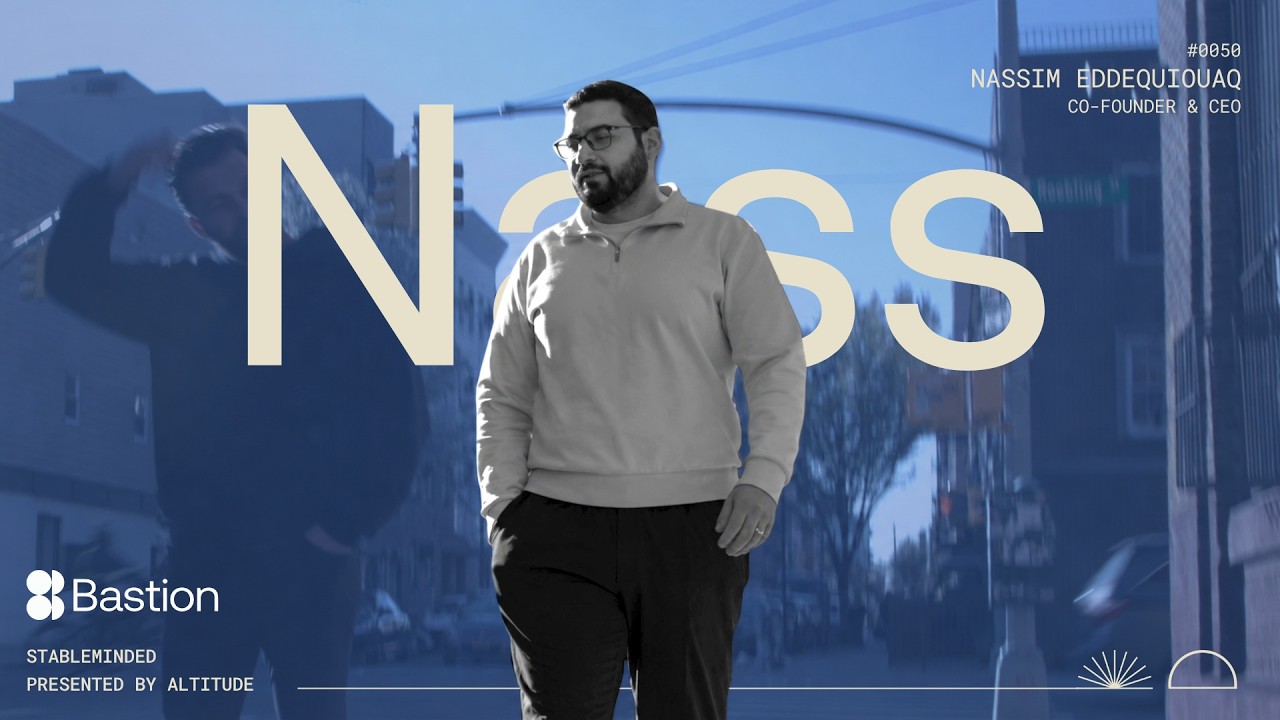
Nassim Eddequiouaq on Building Libra's Wallet, Joining a16z Crypto, Powering Sony Bank's Stablecoin
Nassim Eddequiouaq
In this episode of the "Stable Minded" podcast, host Drew Rogers interviews Nassim Eddequiouaq, co-founder and CEO of Bastion, a company providing enterprise-grade stablecoin infrastructure (custodial wallets, on/off ramps, and issuance) that can operate under its own license or a client's charter. Eddequiouaq discusses his background at Apple, Docker, Anchorage, Meta's Libra project, and a16z, and details Bastion's roughly $47 million raised, its plan to launch a stablecoin for Sony Bank, and strong stablecoin demand across Asia, particularly Japan. He covers regulatory developments including the Genius Act and pending clarity on yield-sharing, citing a White House claim that distributing yield to retail would impact deposit flight by only about 0.02%, and frames Visa's evolution from Bank of America as a model for building a stablecoin clearinghouse network.
Transcript
48 turns, about 10300 words. Straight from the recording, so it reads like speech.
Nassim Eddequiouaq
guest0:01
Asia is going berserk on stablecoins at a level that is hard for people to understand. People in the stablecoin industry are just generally in the digital asset space not understanding payments, treasury, fraud, and kind of, like, all of the landscape around it. The optimization that you're actually building is much smaller than what is typically understood. You're never gonna be able to match the FX rate that you're gonna get from a JPMorgan or or Citibank.
You can't replace it with stablecoins until we have levels of liquidity that are completely absurd launching. So a bank can actually use us under their charter and still perform all of these activities seamlessly, we take care of the technology, the operations, etcetera. We're gonna be launching Sony's Stablecoin for Sony Bank. Let's replace Visa across the entire ecosystem.
Let's just move money twenty four seven seamlessly across the entire ecosystem, and you would be a fool not to integrate essentially that new form of payment.

Drew Rogers
host0:57
Hey. It's Drew. Quick thank you to Altitude for making this episode possible. Altitude is rebuilding business banking for teams on the frontier. They offer the full stack for the modern CFO and founder, a beautifully designed platform for payouts, bill pay, corporate cards, enterprise controls, and so much more. Move money with speed, yield, and total control all from your stablecoin balance. Operate at altitude. If your business is on the frontier, your finances should be too. You can learn more at altitude.xyz.
Nas, how are we doing, man? Good. And you? Thank you so much for having me. I'm I'm Always a pleasure. This. Selfishly, I just I wanted to hear because I just wanted to catch up with you. I always enjoy our conversations, and I'm I'm really excited to hear the latest with Bastian and how things have been going. Yeah. Loved loved every time we we have a chance to catch up, so appreciate you taking the time. Yeah. Of course. I'm I'm excited for the conversation today. So welcome to Stable Minded.
We interviewed you for this live show back when the USDH craze was going on. That was wild. That was an interesting week. Haven't caught up since then, but let's start with the the current intro of Bastion, how you're positioning the company right now. Yeah. Give give the elevator pitch in terms of your role there, a little history of the company so far, and then you have some exciting, like, momentum in certain parts of the world, it sounds like Yeah. On go to market.
So there's there's so much to talk about here, but let's start high level. That sounds great. So for context, Bastion is really enterprise grade stablecoin services,
Nassim Eddequiouaq
guest2:22
and that really is kind of like the infrastructure that supports buildings, stablecoin ecosystems, and and products. So custodial wallets, we have on and off ramps, we have issuance, you know, and everything is offered compliant out of the box with APIs.
Something that actually we came across that is actually becoming more and more interesting for large institutions that we're talking to and our onboarding actually is not only us being the licensed party, but also doing this activity as a full stack service provider under someone else's license. Right? So a bank can actually use us under their charter and still perform all of these activities seamlessly, and we take care of the technology, the operations, etcetera. So it's a very interesting kind of, like, model.
So I'm a cofounder and and CEO, which means that my job is tackling the most important risks of the business and setting the the strategy and the vision for for for the company. More specifically, I handle a lot of things around sales, product, technology, and oversee a lot of where we're headed, but more importantly, where we should not head towards. And other couple of touches on kind of, like, the the geographic location, the different types of models for the type of regulated services that we offer, etcetera.
It's a very complex. It's way more complex than building pure technology. Right? Where you have I I build a product. It's pure technology and software, and I decide, like, which feature to add or not to add. Right? And then you can make it available anywhere. Here, it's a lot more complex when you talk about highly regulated services. Position a little bit of the track record as well. What were you doing before Bastian?
Drew Rogers
host3:58
You've had some really influential and interesting pit stops along the way. What what were you what were some of these key contributions and career moments that you were you were doing before Bastian? Yeah. So You've only said this, like, a million times. So
Nassim Eddequiouaq
guest4:12
I can I can do it very fast? So my background is in security engineering and a lot of trust management and key management. And before crypto, I was at Apple in the security team working on in the trusted execution environment team, like a lot of HSMs, a lot of key managements. Then I moved to Docker, more kind of like development and cloud infrastructure side of things, again, working on a lot of key management. The thing that I realized then is that everyone is trying to manage trust.
Everyone is trying to manage keys in a way that with, you know, PKI's public infrastructure, we're kind of like rebuilding a blockchain ultimately. Every single time that a company becomes big enough to the point of Google, Facebook, slash, sorry, Meta, etcetera, you end up just building a blockchain. And so I just realized that it was the right thing essentially join at at the time, and and I was working actually with the two founders, soon to be founders of Anchorage at Docker.
And then when they started Anchorage, brought me in early alongside a few others and then built the the key management solution at Anchorage, saw the institutional side. Really interesting building infrastructure for institutions kind of to me hit the ceiling at some point because I realized that once you have institutional capital that can enter the space, you need to make the technology available for everyone to benefit from blockchains, especially for payments.
I really connected with David Marcus' vision of sending money should be as cheap as texting people or sending emails, which is $0. And so I decided to join the Libra Project at Meta and kind of cocreated the wallet infrastructure, key management, etcetera, and then moved to, Anderson when the US government decided to not so politely kill the Libra project and, joined as a chief security officer, on the crypto funds with the incredible team at ASIC and Z.
Stayed there to help build out the the the security for for the firm and also the security of the portfolio companies for a couple years. And then at some point realized now is the right time. Institutions are coming to the space. Let's build the platform, the regulated, the compliant platform that allows them to enter the space safely and build global products with the technology.
Drew Rogers
host6:19
Yeah. So so many key roles learnings there. When when you think about the current moment you're in, you've gone through some significant fundraising. How how long has it been now? About almost two years roughly? Yeah. Three years, actually. Three years Yep. In into building the business. How what's the total fundraised at this point? We just closed our strategic round of about, like, 22,000,000, so 47,000,000. Okay. Approaching 50,000,000 fundraised. Mhmm.
Right now, in this moment, I'd imagine as you're growing and scaling and and going through this process of building Bastion, there are probably moments along the way where you can kind of pull back into those experiences and take learnings or take things that you saw, like, leaders like David Marcus go through or Christian go through?
Like, what lately are maybe some examples of moments where you were maybe riding shotgun or you were on the team and you saw leaders like that or teams like that decisions get made in those rooms that you're actually now deploying as learnings first party as as now the leader of this ship. Anything lately? What are some moments that you're pulling from in in the current moment of the company?
Nassim Eddequiouaq
guest7:30
Well, this is such a good question. I would actually flip it back a little bit and I think that taking the key learnings of what didn't work is often time, like, more important because, like, those situations are more deterministic, I feel like, than the ones that actually did work. Things that didn't work, I remember, for example, at the on the Libra project, the reality is that Meta at the time was trying to just right after the, you know, the the whole, like, Cambridge Analytica thing. Right?
They just try to do too much. Right? They try to launch a blockchain, launch a wallet, launch a currency. The reality is that you should start narrowly focused on one thing. Do this thing extremely well. Take the hit of not doing the rest, and then build upon that over time.
And I think that kind of taking the key learning from that of what not to do, which is just expand too quickly too fast, stay laser focused on one thing doing extremely well and build on top of that, I think is kinda like a key learning that I think about every single day, which is really hard because as we were discussing right after right before this conversation, companies that we target, especially on the larger enterprise side, right, like the Sony and others, they don't buy one product. Right?
They buy a platform. They buy a one stop shop solution so that they don't need to cobble a bunch of different vendors together. So navigating this line of building the bare minimum that you need to get into those conversations and close those deals and provide the platform that they need to build their product is really, really hard because it's gonna be expensive in nature, but you have to be laser focused on doing one thing and doing it extremely well. What is that one thing for you today?
Drew Rogers
host9:15
How are you defining that core focus today versus when you were originally getting the what you joke is like an avocado sized seed round from 15 c? Is that how you say it? Not Mango. Mango. Seeds from a 16 z, like, when you first started versus now, how has that focus changed or evolved for you?
Nassim Eddequiouaq
guest9:36
Yeah. I think one thing that was great for us is that we started with custodial wallets, which was not really the flavor of the month at that time. You're using the word custodial a lot. That was also something that Yeah. Is a no no for a while. Regulate regulated was the word. Exactly. We're back to custodial now. Exactly.
I think that the the reality is that at the time, things were very much moving in the non custodial collect wallets direction and to to get them to be able to launch in many jurisdictions very quickly, right, which is very important. But the way we thought about it is that over time, you can build so many products on top of that. Right? Like, we've built on an offering on top of our wallet infrastructure. We've built issuance on top of our wallet infrastructure.
And because for the on and off ramp, you don't have a choice. It has to be custodial. For issuance, it's the same thing. You don't have a choice. Like, it has to be custodial to manage those keys. Then we actually like, by building a strong foundation,
Drew Rogers
host10:34
it actually accelerated us much faster as we built more product on top of it. And so kinda like this focus on getting a foundation that is extremely robust was super super important for us, and we're investing a lot into it. Where where is the investment going right now? Is is that in terms of, like, maintaining or building some of those, like, on off ramp issuance?
Or is it, like, more we're putting more toward what's working, or is there investment going toward more of the the the ecosystem of things that might not exist yet? How are you thinking about that? Yeah. We've built a robust issuance infrastructure, and we're gonna be launching
Nassim Eddequiouaq
guest11:12
Sony's stablecoin for Sony Bank, through that issuance platform. But the reality is that Sony and Sony bank and the Sony ecosystem and as well as other large clients that we can't unfortunately announce yet want to leverage wallets and on and off ramp to be able to make those stablecoins available and useful. Right?
Whether that's for merchants, creators, users, it might be for internal entities all around the world who want to be able to move capital at light speed rather than having to wait, you know, multiple days sometimes with locked liquidity. And so having the flexibility of a wallet solution that can accommodate for all of those things, and now we're investing a lot in like, we're continuing to invest into that. We're continue we're investing a lot into our on and off ramp product as well to be able to just seamlessly
Drew Rogers
host12:03
switch between fiat and and stablecoins across jurisdictions in The US, outside of The US, leveraging different payment rails is absolutely critical for all of the clients. Yeah. Bring us into the story of Sony. This seems like such a marquee use case for you guys. And speak a little bit about how that relationship came to be. How do you do you get into a position where one of your first, like, big wins is a company that at that size? Like, how did that deal come to be? What was the story there?
And then also, like, it sounds like that part of the world, APAC specifically, is like an emerging focus for you. You said you just got back from that. Bring us into what's going on in over there. Yeah. So Sony Bank is is really interesting because within this kind of general Sony
Nassim Eddequiouaq
guest12:47
umbrella, you have a ton of different companies that do very different things. Right? You have Sony Semiconductor that produces most of the image sensors that your phone, my phone, autonomous cars are using. Right? So they're they own that market. You have PlayStation. You have Crunchyroll. You have just so Sony Entertainment, Sony Music. One of the biggest Most of the creators. Yeah. A 100%. Most of the the the the creators on the music side and artists are, you know, signed with with them.
And so, like, all those businesses are so complex. Part of Sony is actually Sony Financial Group. And under Sony Financial Group, you have Sony Bank, which is actually a very successful bank in Japan. And they are extremely excited about expanding beyond Japan and coming into The US market, providing financial services not just in Japan, but also elsewhere.
Especially The US market is ripe for disruption for them because they can provide a lot of those financial services to the rest of the the Sony ecosystem, the Sony Group. Right? There's no really a reason for, frankly, for the rest of the Sony ecosystem to use another bank than the one that you have in house.
So we were in conversations with them very early as part of the the the this, kind of, like, strategy building and, especially through the the venture fund and Sony Innovation Fund invested in in an incredible team, by the way. And we've essentially got connected with the the the Sony Bank team, and I think that we connected at a very deep level with their vision.
We understood exactly what they wanted to achieve, and they understood our compliance first approach with kind of, like, the set of tools that we had built. And so with that, we decided to start the journey together really. They they were working with them not just on the technology and the operations, etcetera, but also the the the strategy of how to go about it, how to actually deploy stablecoins and wallets and on and off ramps as part of all this existing infrastructure. Right?
Like, PlayStation is not starting from scratch or other companies. Like, none of them are, but you want to be able to provide a very strong data first, data backed case for every single use case across the ecosystem that stablecoins can be better than the fiat alternative. And they can be so meaningfully better that you would be a fool not to to integrate essentially that new form of payment. Let's replace Visa across the entire ecosystem.
Let's just move money twenty four seven seamlessly across the entire ecosystem, and people can call call that a closed loop. But at the scale of Sony, you know, that's gigantic.
Drew Rogers
host15:26
It's interesting because by working with them strategically on the VC side and getting the adoption on the bank side, you're almost opening yourself up to a whole basket of customer opportunities that are within this network that is owned and controlled by them that can almost I'd imagine if I'm if I'm putting myself in your shoes, we get me really excited because if you can wedge yourself into some of these business models, you can kind of get a interesting go to market recipe for all of these, like, use cases across different things.
On the sentiment of, like, doing one thing well and, like, focusing, this seems to me to be, like, a risky, where do we start kind of problem within this massive ecosystem that Sony is. Like, how are you guys practically short term? What's the first thing you're trying to launch with them? Like, how are you identifying that?
Nassim Eddequiouaq
guest16:13
Yeah. So I can't really share with the the first thing that is gonna be that is gonna be launched, but yeah. You're right. So you essentially have B2C use cases with them facing retail users. Right? In Japan specifically or No. No. In the in The US, Japan, and and others. But, like, let's say, kind of like the consumers that are in the Sony ecosystem, whether they're subscribers to one of the or gamers, etcetera. Imagine a world where you have so many touch points for them. You have several companies.
You have to pick one, and you have to just start building the data from here. Right? And then you get kind of like this repeatable case study that you can bring to to others. And it's really also interesting because the large companies have also oftentimes dedicated teams that will build common infrastructure, right, that can be leveraged by every single OpCo, every single kind of company within the group.
And so this is also a kind of an important partner that we want to to have as part of this relationship is trying to integrate once and then be distributed many times as well. But it it it is really important to start with one use case. Right? Like, our goal is essentially having one case study on the consumer side, and case study is pretty broad as you can imagine. It's just very large scale.
Just making one work really well on the consumer side, and then one work really well on the internal money movement side as well. That gives us the repeatability on treasury use case and internal money movements and internal operation optimization use cases. So having those two is extremely important for us and then kind of, like, making that repeatable. Yeah. So segueing a little bit. For this show specifically,
Drew Rogers
host17:57
a theme that we're having is, like, founders building things on the frontier. People who are really pushing the edge of, like, what's possible with the businesses they're growing or the the the products they're building. And something that has always seemed so obvious to me about you as we work together directly, it's like you are an incredible leader, but fundraiser specifically. You are able to inspire people to trust you, to put capital behind you. I think there are a lot of founders that are listening to this.
We probably have the majority, about half, if I'm guessing of our listeners are founders or product leaders building building businesses. What you've learned raising capital? You've sat in that position as a founder. You've also sat in that position at a 16 z on the other side of the table.
What are some things that you feel like are secret weapons or, like, things that you've learned really work well that has allowed you to keep bashing going and keep keep capital coming in that founders who are trying to do the same thing should know that you out you may often see not happening right now? Little fundraising masterclass in the middle of the episode. I would put essentially the types of investors
Nassim Eddequiouaq
guest19:04
in three categories. I would say there is the big household name VCs. Right? There there are smaller funds that contribute actually generally a lot in terms of supporting you as well. Right? And then there is the strategic capital that can come from CVCs, which is corporates, the venture capital. So it's gonna be the corp the the the venture arm. The Sony Innovation Fund. Exactly. Sony Innovation Fund, Samsung Next, etcetera. And I think that you have to constantly think about the I need to put the name on it.
I would say, kind like, the capital utility. Right? That's the amount of dollars that you're getting divided by the support that you're gonna get from that investor. And I think that just making sure that you're constantly getting the most out of the capital that is coming in is absolutely critical. And sometimes, that means taking a pretty different approach than most companies.
So for example, for us, our last round might not look like a traditional round, but it was led by Coinbase, Samsung and Sony coming in, NTT coming in, Bprog and and NEC who are major system integrators out of Japan and hashed, which is, like, prominent VC especially out of, Asia. You have to have the capital that aligns with that is gonna provide you utility for what you need as a business.
If what you need as a business is closing companies on the other side of the world that are typically large enterprises and won't talk to you otherwise, then you might want to optimize for a specific jurisdiction from those venture capital firms that are well connected. You may want to optimize for CVCs as part of your investment. Right? And so your cap table might just look different from a company that is just very US centric, wants to focus on getting all the household name large venture funds.
We get the tremendous amount of support from a six and z. Right? Like, six and z crypto has been by far the most helpful funds I've seen in my entire life across companies, not just at Bastion. What does that look like? What are they doing to help you support? I mean, you know, our CTO, he was introduced to us by by a sixteen z. Many of our employees actually come from introductions by and and sports by a six and six talent team.
The go to market team is constantly connecting us with all the largest corporates and startups for our mid market sales motion. I know Mark, I recall has been a really key
Drew Rogers
host21:36
involved party in the formation of just leading you, and I don't know if you still have regular calls with him, but Yeah. They seem very connected to you personally as, like, supporting you as an individual as well. Constantly. There is support at a
Nassim Eddequiouaq
guest21:51
kind of, like, founder growth support. There is in conflict just leadership and just being better at making decisions. Sometimes it's just telling you what the the hard thing that you need to hear, right, of, like, what's helping you debug, basically. And oftentimes, the problem is you as the founder, and they help you through that process. They help you kind of give you the the lay of the land of, like, what's working and what not working that you might just be too deep in your own company to to look at.
There's just, like, a very broad range, but I would say regulatory, it's been incredibly helpful. Public policy as well, very impactful for us, you know, where the Genius Act and the Clarity Act and and market structure bill are extremely important for us. Right? They they dictate who we can share yield with and our activities as an issuer.
Having the support from a a venture fund who is so deeply connected essentially to all the source of information and can relate to you this information before everyone else is incredibly powerful. So we optimize for that, like, really just getting connected to all those large enterprises and and companies in The US. The reality is that we also care a lot about Asia. Asia is going berserk on stablecoins at a level that is hard for people to understand. Yeah. What does that look like right now? What do you mean?
It is you have to go to understand because the financial markets in Japan are incredibly strong. The yen is really the only free flowing currency in all of Asia. And the problem is that for the longest time, the yen had a risk profile and a yield profile that were less interesting. Right? So the currency was getting devaluated. The, obviously, problem with the size of the population, so, like, the the TAM of these companies just decreases over time. Right? Like, it people get older, the population shrinks.
So companies and and financial institutions and and the yen, specifically, was getting devaluated and the interest rates were negative, which means that, like, you're losing money as you're holding the asset, which is completely different from the US dollar. Right? And so now that it's completely reversed, the interest rates are, like, getting close to 1% on the short term rate and, like, very fast growing. The economy is really stabilizing and and getting stronger and stronger.
Those companies, all those financial institutions are realizing our TAM is shrinking. We need to expand outside of Japan. They've maximized. Like, some of the companies if you look at, NTT, for example, who invested in in Bashin and has been an an incredible partner so far, if you look at just their raw numbers, they have over 90,000,000 users in Japan. They're not a lot more than 90,000,000 people with a phone in age of, like, actually using a digital wallet. Right?
And they have almost all of that population as customers. How do you sell more? You have two options. Either you sell more financial services to the people that you already have as customers or you expand. How do you do those things? Stablecoins and on chain financial products. And so they've realized that this is the next opportunity for them is expanding globally, doing the thing that they do extremely well in Japan, outside of Japan, starting with the rest of Asia, sometimes The US.
We're starting to see SMBC and others really kind of do more in The US and outside of Japan. We're really expanding, and stablecoins are the primary opportunity for that because they don't need to get a a banking license in each one of those jurisdiction. They can really just easily build their stablecoin, make it available in wallets on an off ramp infrastructure, everything that we know, and then build kind of like a stack that looks like what they have in Japan, but then expand it.
And then in Japan, they can start expanding access to financial services that gets, tokenized, access to Aave, access to collect lending protocol, and other vaults, right, that may have, like, different strategies directly back home. And so we're seeing a lot of interest on those two things, and Asia is ripe for
Drew Rogers
host25:57
disruption today. Got a connection with Mario. That that would be a good one. Yeah. Think thinking about the use case here and and specifically around compliance and regulation and some of these I don't wanna put those two things in the same bucket. I'll say specifically regulation. What have you realized lately?
We're in a kind of weird limbo moment, it feels like, with some of this with Clarity, with Bastion and how it's structured and the trust charter and acquiring that and and going through that process, regulation seems like a really, really key thing for what makes Bastion great, what makes Bastion unique, how you can offer services like what you're doing. What's the current state of the union in your mind of, like, the the conviction of, like, we're going to regulation first, we're going custodial first?
Is that is that thesis playing out successfully in your mind, if you're being honest? Is that still, like, strongly held? And also just what is the what's the current feeling around some of the regulatory clarity that is apparently coming soon? Like, what are the things that maybe the policy side of a 16 z you've mentioned is very helpful? What are they saying to you right now?
How are you bring us in a little bit to your mind around the current state of regulatory clarity with things like yield and some of the stuff, and how is that impacting what you're building tomorrow? Loaded question, but gotta ask.
Nassim Eddequiouaq
guest27:13
A few questions there. I'm gonna take the the second one first. So in terms of kind of the regulations, there were really two parts. The first one was obviously the Genius Act, and that just unlocked a ton. Right? Companies realized, okay. The current administration is actually behind this. We're actually pushing that entering the digital asset and and stablecoin space is not gonna be resulting in massive issues with the the current administration. Let's let's try to do something.
And so it kind of, like, opened the floodgates. Phones started ringing tremendously after that. I think that and and that was true for holding stablecoins, moving stablecoins. Right? And then the question came around the yield and issuing a stablecoin because most companies, large companies want to issue their own stablecoin. They want the economics. They want the risk management. They want to have full control over those. We saw that with, the Drift hack, like, the Drift Protocol hack, for example, recently.
Those companies, they want to be in a position where they can control their stablecoin. They can freeze the assets. They can reverse those revert those transactions because, ultimately, it's a permission system. A stablecoin is a permission system where Dishware can undo transactions. And if you think in a world of Sony, for example, like Sony as an ecosystem, Sony Bank wants to be able to revert transactions in the case of account takeovers, on case of phishing.
There are a lot of reasons why you want to be able to undo transactions or have full control. And so there's a tremendous amount of interest in that, but, obviously, the economics around earning the yield is absolutely critical. And so being able to understand what you do with that yield with those rewards, can you build, a loyalty program? How does it change depending on the authorization that you have around the yield sharing?
It's something that some companies decided not to wait for and kind of take the the risk essentially to just go forward with the plan. And some companies that we're talking to are still waiting for that to be clarified. Now, I don't know if you saw earlier today, there was kind of the the White House put together
Drew Rogers
host29:16
Definitely did see whatever you're gonna say.
Nassim Eddequiouaq
guest29:19
The White House put a a research actually, underlining that, allowing, yields, to be distributed to retail and kind of and and consumers would only impact flight deposit flight by point 02% or something kind of, like, negligible saying that, really, the the deposits paying deposits are not gonna be impacted by the yield. And I think that this is kind of like a common view that a lot of people in the industry have if you actually kind of, like, take more time to do research. Was a just so I'm understanding this.
This was like a research kind of like a one off, like By the White House. By the White House, came out with this kind of owned
Drew Rogers
host29:58
research around what they believe to be true, which
Nassim Eddequiouaq
guest30:02
from what it sounds like is very optimistic toward Stablecoin yield. The stablecoin yield being something that can be. And those negotiations are happening. It sounds like in the next few weeks, couple of weeks, we're gonna, like, land on a negotiation and can hopefully get that to pass before the the summer, essentially.
And then in the next few weeks would be ideal to get everyone to agree, banks, stablecoin industry, and just move forward with a plan that allows probably with some constraints, some restrictions as it should be on on the yield. Right? Like, you can't really say, hey. Someone in the wild holds a stablecoin. We're just gonna distribute to them. There has to be something around compliance. There has to be kind of like a usage for rates naturally.
But I do believe that, we're gonna land on something that is very beneficial for the for the stablecoin industry based on what we're seeing and and hearing. What are you hoping for personally? What what do you want to happen? I mean, I want myself, my family, you to be able to open a bank account or a stablecoin account and be able to get as much return on this and as much rewards as possible. And the bank or the issuer are gonna get x and the goal is for your y number to be as close as possible to what they have.
But you can't increase that amount if you don't have competition. Right? There needs to be competition. There has to be competition between between banks, between financial institutions are able to provide risk free rates guaranteed by the US government, and that will apply essentially some pressure for banks really to just share more of their revenue with with people that with their own consumers. Right? Like, it's really just a free it should be a free market.
And so I do think that more competition is just gonna be more beneficial. There has to be competition in the free market. Yeah. It's an interesting place because in some ways, either either side of how this shakes out, Bastion is still, as an infrastructure, gonna still be able to serve whatever reality we find ourselves in. Yeah. And we serve banks and we serve non banks. Right? We have we're either the licensed party or we act under someone else's license.
The reality is that you can still structure things regardless of kinda, like, what the outcome is. You can still structure based on the Genius Act so that the yield or kinda, like, rewards are part of a broader loyalty program. And the companies that we target do have global loyalty programs. Right? Whether it's discounts, whether it's, the ability to have, like, premium, like, offers as part of the ecosystem, we target companies that have, you know, fairly large ecosystems for for this issuance product.
And so from our standpoint, we're in a good position regardless, but I do think that for the sake of just consumers winning, there has to be more competition
Drew Rogers
host32:52
around deposits. Yeah. The closed loop, I know it's not may have been not the best term to use, but it helps me think about, like and we've talked about this many times. I'm going back into a couple years ago, but the idea of a successful bastion means that you are going to be able to scale these ecosystems. And within a certain ecosystem, there's gonna be efficiencies that get created as these as as stablecoins get issued, moved, and earned within an ecosystem like Sony that we've mentioned.
If that happens within just that ecosystem, that's really exciting. But if Bastion continues to succeed, you're gonna start to be able to do that across other ecosystems, across other businesses.
Nassim Eddequiouaq
guest33:32
And there are network effects. Right? The network effects of that, I'm thinking, is just, like, extremely powerful. Is that still, like, the vision that you have for how this really becomes hyper efficient? And then what types of business models do you start to then challenge? You've mentioned, like, Visa earlier in the conversation. Like, what business models does that start to challenge where you can start collapsing economics down? Yeah. I mean, that's that's the question. Right?
Like, you're looking at people companies building wallets on and off ramps, insurance products, etcetera, is what are the your network effects? What makes it so that every single time that you add a customer, it builds more value for everyone else that you have as as clients. And us, for example, being a common issuer of multiple stablecoins mean that we can actually be pretty much like the the clearing house between them. Right? Because we can seamlessly convert between one and another.
So imagine that you have a Sony coin and someone, like a merchant actually receives Sony coins, but they want to pay their clients into, like, something else. If we're actually the issuer of those two currencies, we can actually do so at one to one. Right? And not just one to one in terms of price, but actually in terms of settlement time. Right? The settlement time is also pretty critical. You don't want to wait t plus one for your y or ACH or what have you to to settle.
And so that's the part where us being kind of like a common provider to those companies actually build a lot of value. Every time that, you know, you become a client of Bastion, you actually get interoperability with the rest of the system. Now we have that around the on and off ramp. We have that around the wallets. Right?
If we can actually do KYC in one ecosystem and actually cross match that with someone else that we've done, you know, that is onboarding elsewhere, but that has already done KYC with us, that actually makes it also kind of economies of scales worth it for us. And you can see that with Stripe. Right? Like Stripe Identity is extremely powerful and and Link is very powerful because you've onboarded in one for one merchant, and then you log into another one and you don't, you know, you just provide your phone number.
Oh, that's you. I remember you. Okay. No need to KYC. I think that this experience is really what we're aiming for across ecosystems, and we're hoping to launch Ken Chirico like Too Many Details, but with one of the largest companies in the world and, you know, that plus and that is not Sony, and then that plus Sony plus others will actually give us a tremendous amount of value in terms of reducing the load on the KYC side, making transactions just much more efficient because the addressing is a lot easier.
And then, yeah, with issuance, we can just do more. So compare and contrast this a little bit because we we started the day with Better Money Company. Mhmm. You used the word clearinghouse, and it's interesting because
Drew Rogers
host36:19
they're building this kind of clearinghouse network for multiple issuers and multiple partners. Yeah. I believe you guys are a part of this. Yep. I'm remembering that you guys launched with them. Exactly. So that for me seems like a similar model, but within, like, other network effects you'll be able to interoperate with, like m zero and Braille and the rest. What type of efficiencies can get can get created? You've mentioned, like, compliance within the Clearinghouse internally.
Is this is this where you really start to maximize the revenue for Bastion that you can create? Like, I'm imagining if there's, like, economics built in at the transaction level, you know, things like that can become really, really fast and really low cost. Is that how you're thinking about this when stablecoin sends or transactions happen clearing house within the family, if you will? Yeah. Think about it as kind of, like, concentric circles. Right?
Like, you have kind of, like, your the platform that you serve directly as the the infrastructure provider. Right? In our case, that would be kind of, like, the Sony Bank and Sony ecosystem.
Nassim Eddequiouaq
guest37:18
And then and kind of, like, other clients that we have. This is our inner circle, right, of, like, ruthless top efficiency across the the board converting between the stablecoins, sending funds, compliance, etcetera. Then you have the second layer around it.
And the second circle where this is gonna be the partnership that we built where we have a specific integration with great companies like Better Money that provide interoperability between stablecoins that we issue as well as other issuers, kind of like trusted issuers. There, the counterparty risk is also pretty important. Right?
Like, we want to be part of networks that maintain a very high bar from a compliance standpoint because whoever sources from us needs to also be able to kind of trust the other partners similarly. And so this is why, you know, we're not gonna be necessarily building relationship with every single clearing houses, collect stablecoin native clearing houses out there. Right?
You want to maintain a a trust collect level because then over time, you can actually adjust your liquidity ratios to actually account for those things. You can maybe even do, delayed end of day settlement, right, if you actually trust each other. This is what a lot of exchanges might be doing. End of day, you actually settle with Circle or with, you know, Tether or or others. Right? You don't want to be minting and burning every single time that you receive a request.
That's only possible if you're regulated in a permissioned environment, I'm assuming, because Yeah. Trust it to hold the waiting period. Exactly. Yeah. And so you want to make sure that you also have enough trust in the other party to lend them this kind of, like, intraday liquidity. Right? Because that's that's a credit that you're kinda making. So over time, our goal is essentially building more of these, like, strategic relationships where, you know, we want to build relationship with other issuers.
I think it's critical. I don't think that there's gonna be a gazillion issuers that are gonna be trusted. There's gonna be strong network But it's important to have interoperability between those those, stablecoins, especially those who are not USDC and Tether, basically. Yeah. Do you still regard
Drew Rogers
host39:30
Visa as one one of these historic examples of businesses that you look at or success stories that you look at as you think about what's possible with a company like Bastion? Is that A 100%. Are there any others that you think of of, like, business success stories over decades and decades and decades that you think about when you think when you imagine a successful scaled bastion one day other than Visa? Think
Nassim Eddequiouaq
guest39:53
I mean, Visa is the holy grail. They're the absolute Why do you say that? It's the best story ever. It is just like the the the the best story. Right? Like, they started essentially as kind of like a a subset of Bank of America, right, Bank of America at at the time. Then, and this is kind of like it reminds me a lot of our industry in a sense. Right?
Like, it was very centralized on company, and then it tried to decentralize by actually being extracted out of Bank of America into something that could be integrated by all the top banks in The US. And they tried to make this model work, right, where it's, like, very decentralized and it's, like, consortium based and and so on. They they kind of, like, failed at it because it was way too hard to get anything done. Right?
Like, when you have too many companies come in to get try trying to come together from their own vantage point and and with their own incentives. This is why most bank consortiums or any consortium just fails. Right? So, like, 95% of consortium fail at least. And so they had to decentralize. They had one person at the head of it who kind of, like, decentralized everything and said, like, okay. I'm just gonna be building one entity out of this.
I'm gonna take this out of your hands, and we're gonna make it extremely efficient, and we're gonna be redistributing to everyone based on the volume that you bring to the network. And this is and then starting from there by getting all the banks on board with still kind of, like, having this third party handling all of that and then going merchant by merchants. Right? And kind of just acquiring all those merchants. And it's almost like centralization
Drew Rogers
host41:27
was the the vehicle that allowed them to exist, maintain, grow, and solidify without that central centralized moment of, like, taking back control, which some some would have in that moment regarded as, like, a bad thing or a risky thing, whatever. But, like, that centralization moment. What I don't remember what year this was. This was, like, mid nineteen hundreds, sixties. Yeah. I think it was sixties. But that laid the foundation for what Visa is today.
I don't think if would've if they would've stayed in this, like, decentralized model, you someone would have come in and disrupted it somehow. 100%.
Nassim Eddequiouaq
guest42:00
And so I do think that this is kind of like a key lesson for us that decentralization is just not always the best path. Right? Like, sometimes the best way to to build a network is to actually centralize the the key structure of it and then you can decentralize, like, the rails that this thing, you know, runs on. Right? Like, can tap into Swift. You can tap into ACS. You can tap into blockchains. You can tap into a lot of other things and then people get to decide, do I use Visa? Do I do I use Mastercard?
Do I use other things? But, yeah, I do think that Visa is kind of, like, the ultimate business in in my mind Yeah. From the standpoint. So going back to the practical moment that we're in right now. So so and the sentiment that I'm feeling a lot of people are talking to or feeling is, like, kind of in this weird, like, limbo or, like, sort of plateau feel.
Drew Rogers
host42:48
Like, sentiment with stablecoins, Agents of Commerce, all this stuff is, like, really, really optimistic. But there's a sense of, like, why isn't this growing as faster than we thought? We have all of the pieces and tools that seem available, and there seems to be something in the way. I don't personally I'm kind of exploring this actively right now. It's like, people like you, founders, you're you're face to face with these banks.
You're face to face with these institutions that I know eventually are gonna really, like, avalanche into this. But from my vantage point and a lot of the people we talk with, there seems to be this, like, pace that seems slower than we thought or adoption. And if you look at the volumes, it's like they're impressive, but they're not actually as big or as impressive as we thought. Do you feel that way, and do you have an inclination as to why that might be?
Any thoughts on, like, the sentiment right now with some of the customers you're speaking with or or leads you're talking to, where that might be coming from? Yeah. I think people
Nassim Eddequiouaq
guest43:42
I think that this is typically a consequence of people in the stablecoin industry or just generally in the digital asset space not understanding payments, treasury, fraud, kind of like all of the landscape around it. The the reality is that take for example, like treasury use cases.
Citi and and JPMorgan and and a few others have been able to build systems over decades that are extremely strong as at what they aim to do, which is moving large amounts of money into the top currencies at an extremely, extremely cheap price. Right? And you're able to do that very efficiently. You're never gonna be able to match how, like, the the FX rate that you're gonna get from a JPMorgan or or Citibank, especially for those, like, large corporates.
You can't replace it with with stablecoins until we have, you know, levels of liquidity that are completely absurd on on chain. Those things, those systems are integrated into highly customized treasury management systems such as SAP and and GeoTrader and others that have decades long contracts with those companies. Like, it's impossible. You can't rip it off. Like, the entire team the the entire treasury team is, like uses that from morning to the evening, and they're just trained on that one thing.
And the first question that they're gonna ask you is, how does that integrate with SAP? We're not gonna replace anything that we have. Just let us know if this that integrates nicely with SAP. And so that's kind of like the the mental model and it's that does the same thing for the consumer payments. Right? Like, the stablecoins, when people say, like, oh, like, you avoid the 2.9% or, like, 3% fees.
Like, rail the inefficient rail that you're actually swapping out for stablecoins is actually only a smaller portion of those 3%. Right? You have the actual accounting. You have the fraud management. You have the merchant of record kind of and tax handling and reporting. You have just so many things as part of that that cost a tremendous amount of money and the compliance and KYC transaction matter, and all those things, case management, so on.
Like, the optimization that you're actually building is much smaller than what is typically understood. Right? So this thing of saying, oh, I'm replacing those 4% with point $0.00 $0.01 cent. It's kind of like a meme. You're you're undermining what is actually baked into everything that Exactly. Yeah. And so the optimization that we're gonna get to are typically much lower than bar for change is for those large companies, especially the scale that we're talking about. Right?
They're already integrated with Stripe and checkout.com, Adyen, and others, right, in terms of payment processing. And those payment processors, they're gonna be starting to roll things out with stablecoins as well to better optimize. And their banks, right, like these payment processors, banks are also gonna become crypto native. Like, LEED is starting to add support for Stablecoins natively and others as well.
And so I think that you're gonna start seeing those margins kind of, like, increase first because they're not gonna change the price. And then when there's gonna be more competition, they will decrease the price because behind the scenes, stablecoins are already gonna be used for settlement. And so we're starting to see that quite a bit.
And I think that this is one of the reasons why we're we're not seeing the adoption is that there has to be a strong clear use case that is easy to implement at a scale that justifies change. Yeah. And even if there is a justification to change,
Drew Rogers
host47:18
to your point, there's a lot of stickiness and unwrapping and unfolding,
Nassim Eddequiouaq
guest47:22
untangling to even get real change to happen due to all of the embeddedness that this stuff comes with. And you probably would not even happening, but it's it's just taking a while. Maybe you won't even realize the majority of the transaction. Do you know how much, like, PayPal, for example, is settling internally in US dollars versus PYUSD? You know, you're not gonna see those things happen until it's, like, publishing a very big thing, etcetera. Right?
Like and and they started doing more of that, And we're gonna start seeing more and more companies do that as lead for non g 20 currencies. But the reality is that in g 20 currencies, things are quite optimized, honestly, more than people give it credit for. You you mentioned lead. Arabors making a lot of news. These are, like, on chain native
Drew Rogers
host48:05
modern banking institutions. Do you see when you think about Bastion, are you kind of imagining those as ideal partners and customers? Or are you kind of saying the stack that Bastion has and the the ability to tap all of this out of the box is actually something that can help maybe these more legacy banks or or scaled larger banks that are trying to not lose business to those to those types. You're actually saying, hey. Let's future proof you guys against some of these new modern fast moving Arabors.
Nassim Eddequiouaq
guest48:35
Is that more of the play, or is it kind of both? Both, actually. So we do partner with with those banks essentially on the kind of, like, access to core fiat rails. Right? They have the direct access to the to the banking rails, but we want to provide infrastructure. Banks will integrate core fiat infra from existing infra providers there. But on our end, we want to help them on all things blockchain.
We're like, we want to give them the orchestration of funds, the wallet infrastructure, and then potentially kinda like the stable coin earning capabilities so that they can actually provide this ability to hold, move, and and earn on stablecoin to their own clients. So enabling these kind of neo banking as a service models that are stablecoin focused is definitely a core focus of of ours.
Drew Rogers
host49:26
Couple rapid fires as we close. Mhmm. What is something that you you know, you mentioned that, like, Mark Andreessen and and team are very involved and very help helping you. You mentioned kind of, like, see things that you may not be seeing or challenge you. And what what are some things that you've thought would be true or forecasts that you had that turned out to be incorrect or things that you thought would happen maybe in the last couple years that you've realized, like, okay. I was wrong. We need to pivot.
We need to, like, change. Any any examples
Nassim Eddequiouaq
guest49:57
of that? Sure. I think that the the Qsutio wallet thesis against, like, non Qsutto is something that didn't play out, like, as I as envisioning initially. I think that we're part of it is timing. So, like, right now, we're seeing a tremendous amount of interest, in Qsutto wallets, including from non Qsutto wallets who actually want to go up market, and they're knocking at our door actually saying and companies that we you remember that we actually used to compete with. It was a really crazy moment.
Like It was crazy. In, you know, 2020
Drew Rogers
host50:29
gosh. When was it? 2023. Yeah. Because you're like, the custodial nature felt like a downside because the pitch with all these other other noncustodial wallets is like, oh, we can scale anywhere. We can scale, you know, because we don't hold the keys, that's an advantage. Like, you can go you can grow. And it was like a really weird, difficult thing to deal with because that is such an advantage. It's like you can scale user access to these financial services 100%. All over the world.
And that felt like, in that moment, like a really, like, man, what did we get wrong? What what is what is going on here? For context, I was working directly with Bastian at this time. And so as I've got a front row seat to that moment. But it sounds like we as time has gone by, that that thesis has kind of come full circle to say, there actually are limitations to this that are now being realized. Say say more to what that means. Yeah.
Nassim Eddequiouaq
guest51:17
The reality is that so just give giving a very quick background on like, Qsuru is gonna be companies that put the the the at the forefront were unable to move the funds without the end customer, the end client, and as a result, we shouldn't be kinda, like, regulated and we're just gonna provide that as a pure tech play. Right? Like, here is your software, use it as you want, and then we can, like, build the back end and the front end infrastructure to to manage that.
Bastian took a very different approach from the get go saying, we're actually gonna offer that as a regulated product that is KYC gated that actually performs all the transaction monitoring. We handle all the compliance for you, and we're a licensed entity. It's an insured product compliant, regulatory compliant product, etcetera. As a result, we can only offer it in the jurisdictions that were compliant in and that were licensed in.
So a lot of from a jurisdiction standpoint and and rated up adoption standpoint, definitely more constraining, especially for more crypto native companies. But if you look at the enterprises, the companies that are facing large merchants, what is the first? And the the second question is, are you keeping my funds safe? Are you compliance? What Can I get in trouble with the regulators or with local law enforcements? Do you manage all these things for me?
Those companies think about it from a standpoint of how do I manage my risk? How do I reduce my counterparty risk? And the counterparty risk is most managed when you're actually working with a regulated financial institution like us that is handling all of this and is liable for lack of compliance.
And so, I think that this really resonated with not the first wave, right, which was really between, like, 2023 and, like, most of 2024 were really a lot of crypto native companies that wanted to go to market very quickly, very fast, a lot of DeFi, NFTs, a bunch of new protocols, etcetera, did not resonate. And I really thought that the institutions, the larger companies that would care about this aspect would come to the market sooner, And I think that it really took genius to actually open those floodgates.
And so Still, it's taking time. Exactly. It's These companies don't move as fast as the NFT marketplace. But startups are about timing. Right? It's all about timing. So yeah.
Drew Rogers
host53:36
What is when you think about what's the most undervalued thing about Bastion? What have you built that, like, you're actually really excited about that is behind the scenes that you're like, man, if people like, this is this is kick ass. Like, people if people knew how good this is. What anything come to mind there? Yeah. I think that actually our wallet solution is something that I'm incredibly
Nassim Eddequiouaq
guest53:58
excited by because that is ultimately something that is hyper flexible. We accommodate for segregated wallets. We accommodate for omnibus wallets. Right? Like, some institutions actually want to have the funds in a central exchange mode and and, you know, have a completely different way of managing those funds and kind of, like, have everything private in their own internal ledger.
A non financial institution who want to get regulated and obtain your license at some point, we give you the flexibility of going through the journey yourself. Like, you may start without your license, choose us, and then as you get your license, no problem. We'll just operate under your license over time. And we're seeing a lot of every time that we're in conversations with those larger financial institutions or enterprises, they love this model of, okay.
I'm just gonna get to market in the current set of things super fast. And then as I want to own more, I'll be able to do that because Bashin gives me the flexibility.
Drew Rogers
host54:50
It's really good. And it doesn't seem it it's sort of like a it's same thing I'd imagine with the stablecoin strategy too. It's like, maybe I want to work with, something like an AUST or a USDC or like a stablecoin that I don't own and manage the program. Or I can get on base with something. And then over time, you can actually say, okay, great. Now you can issue your own through ours. If you can graduate into that, it doesn't need to feel like you know, this or that type of thing.
Fashin integrates and works with many different stablecoins Yeah. Not just the ones that you've And then we can own more and more of the compliance less and less Yeah. Whatever you want, financial operations, everything. We've kind of, like, built a full stack of technology,
Nassim Eddequiouaq
guest55:26
services,
Drew Rogers
host55:27
operations, etcetera. So cool. Nas, thanks for thanks for this. Thank you so much, Ryan. Time time flies, but really appreciate your time here today. Thank you so much. Always a pleasure.