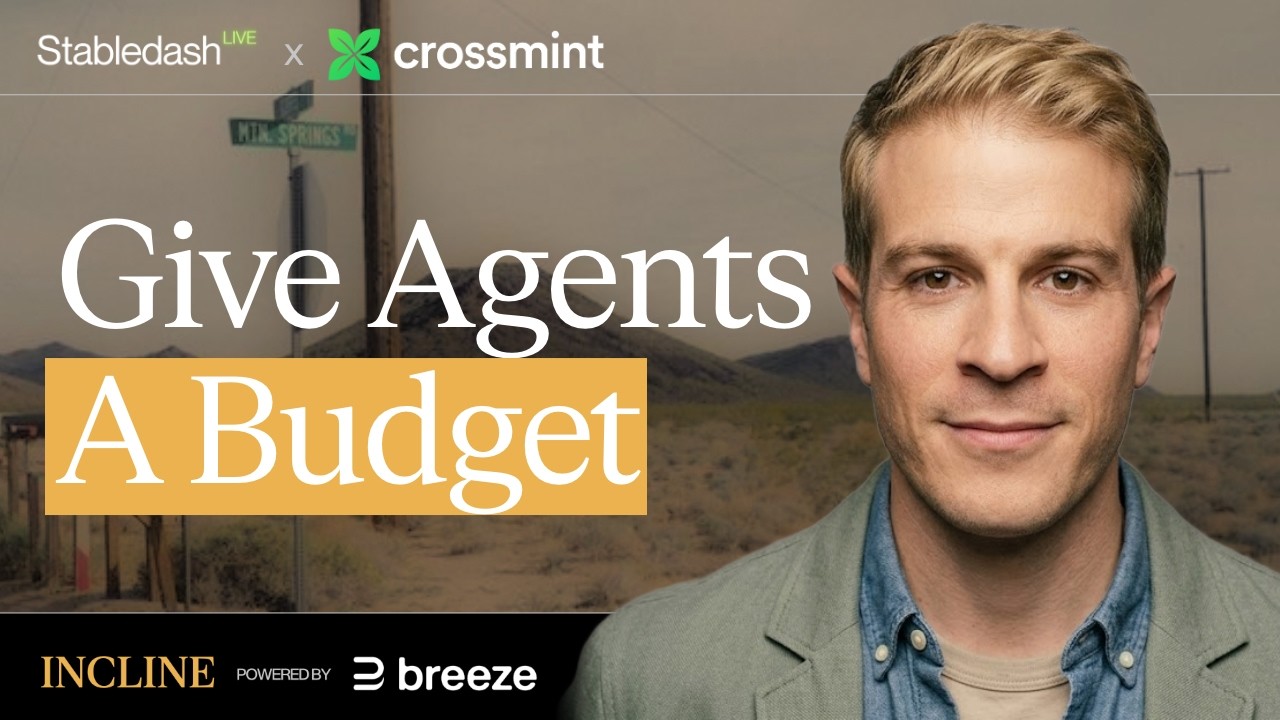
Host Zach Fowler and co-host Drew Rogers interview Luke Truitt, cofounder and CEO of LoopScale, a DeFi lending platform on Solana. Truitt explains LoopScale's evolution from attempting to replicate off-chain lending for real-world assets (RWAs) to building an order-book-based credit marketplace that now supports diverse assets including stablecoins, tokenized assets like ONRI reinsurance tokens, and leverage strategies. The discussion covers asset evaluation criteria, misconceptions about tokenized products, and LoopScale's vision for embedding yield strategies into fintech and neobank platforms through their "OOPS Y'all Earn" vault product.

LoopScale
loopscale.comLoopscale is a decentralized lending protocol on Solana. It matches lenders and borrowers directly for fixed-rate, overcollateralized loans across a wide range of collateral types, including yield-bearing and permissioned real-world assets.
Key takeaways
- LoopScale uses an order-book-based model where individual loan agreements are fully configurable by lender and borrower, unlike algorithmic pool-based competitors like Aave and Morpho.
- The platform prioritizes stablecoin-denominated yields and assets that can pass returns to stablecoin depositors while meeting safety and hurdle-rate requirements.
- Luke Truitt's background combines engineering and trading; he previously worked in market making before building LoopScale starting late 2021/early 2022.
- LoopScale launched OOPS Y'all Earn, a strategy vault product that automates looping and lending across multiple credit markets, launching about three to four months ago.
- Key misconception: users often misunderstand what tokenized assets actually represent; explaining the underlying fund structure and mechanics remains a major education challenge.
- Future vision focuses on financing capital-intensive industries like AI infrastructure, robotics, energy, and manufacturing through crypto rails at lower cost than traditional brokerage channels.
- ONRI demonstrates a successful model by blending attractive DeFi yields with access to less-obvious assets like reinsurance, which are harder to access through traditional brokerages.
Transcript
18 turns, about 3500 words. Straight from the recording, so it reads like speech.

Zach Fowler
host0:04
You're watching Sable Dash Live, the modern money show. We have our first appearance from Luke Truett, cofounder and CEO of Loop Scale. Luke, thanks for coming in today. Really excited to to meet you and dive into to what you're building here at LoopScale. How's it going?
Luke Truitt
guest0:23
It's going well. Thanks for having me on.
Zach Fowler
host0:28
100%. Yeah. We we have known I have I have known Mary for a while, but we've never had a chance to spotlight all all the great things that you guys are doing. I know you've been around, like, DeFi and Yield, and you've been building this business for for quite some time. Maybe we start with just the intro of loop scale.
And then my my kind of framing question here for this conversation is, like, what you are currently prioritizing at the company and what you're seeing today versus maybe some of these, like, initial theses that you had or focuses that you had in the early days? Like, what what might be different or similar?
Luke Truitt
guest1:07
Yeah. For sure. Well, I guess starting starting with how we got here, my background is engineering and trading. Before I got into the space, I was doing market making and kind of got excited about where crypto fit into, you know, traditional financial world as a alternative set of rails, you know, to build financial product up of. We started, what became loop scale towards the end of twenty twenty one, early twenty twenty two, is really when it kicked off.
But we were much more focused at the time on, like, you know, how we replicate existing off chain, you know, lending transactions with something that could be done fully on chain. So that was a lot of, like, you know, our old fashioned RWA backed loans. So, like, direct, like, whiskey lending, collectibles, you know, tokenized private company stock, you know, locked up token agreements that you're distributing over a few years.
Taking these weird esoteric assets and saying, hey, can we build, you know, a p to p esque credit market where we're going and finding LPs on the lending side who are interested in this stuff. It's a very manual process. So over the kind of following, you know, year or two, we really ended up wanting to pivot the business to be something that was a little bit more scalable.
And so a, you know, a bit of that background is reflected in how loop scale works today as I'm sure, you know, you guys are familiar with like how a Aave or a Morpho work under the hood.
Loop scale took a little bit of a different approach and instead of all these pools and sort of algorithmic rates and things like that, everything under the hood on loop scales, order book based, all individual loan agreements, configurable at the individual, you know, at the time of origination, all of those things, good rates, LTVs, oracles, all that stuff is on an individual lender borrower basis.
They haven't done a lot of work to kinda abstract that at the user level, so it feels more similar to a traditional DeFi credit product. But ultimately, you know, it's a, yeah. The objective for us long term is something that's a bit more flexible and can can grow into some of the more common traditional credit use cases. Yeah. We are, you know, one of the main lending venues on Solana. We've, you know, worked with a ton of, especially RWA tokenized bigger credit and reinsurance and things of that sort.
But obviously also service a lot of the crypto native lending as well.

Drew Rogers
host3:40
Yeah. Luke, I was gonna ask, like, how do you think about which assets you're working with on loop scale? Because if you scroll your x right now I mean, one, if you're somebody that's yield hungry, you're just you're gonna have a you're you know, it feels like you're at a buffet or something because you have you have auto, which is, you know, Hashra's auto auto product. Yeah. I see HYUSD. I see ONRI. I see Sylv, which is a tokenized silver from the Dominion team.
It really seems like you have everything from, you know, USD strategies. You have some strategies with, you know, tokens like hype. Looks like there's correct me if I'm wrong too. OnYC, so, yeah, how do you evaluate what what assets you're working with? And maybe if you second part of that question is if somebody this is their first time hearing about loop scale, where should they maybe go look first?
Luke Truitt
guest4:32
Yeah. So I think, you know, there are kind of two sides of the marketplace that we're thinking about when we're onboarding new assets. Obviously, you have the people who own those assets and maybe they want to get additional exposure via some leverage, some looping. And so those are people coming into the platform saying, hey, you know, I'm very excited about ONYC and I wanna be able to, you know, earn some additional yield on that. So those are people who are already informed coming with the assets.
So for those folks, those are like inbound requests. People saying, hey, I really want, you know, to to be able to support x y z, collateral so that I can go do this stuff. So then we go diligence it and we go run through that process. On the other side of things, you know, we're always trying to find new especially stable coins as deposits on the credit side or on the lending side.
And that's a process, you know, that, generally requires from a location of where that credit is going, us to be balanced about how we're looking at the available assets on chain. And so our our main goal right now is, you know, what new assets can we bring into the fold that have demand on the borrower side, but they can kinda clear a hurdle rate that's exciting for DeFi native lenders. I mean, obviously, there's a spectrum related to risk and liquidity and things like that.
But a lot of what we've seen, be exciting to people is still stablecoin, you know, related yields. So I'm looking for stablecoin denominated yields assets that are roughly pegged to a stablecoin or denominated in a stablecoin and then, can pass back yield to stablecoin depositors. That's where a lot of the focus is right now. There's a lot of interesting new assets coming into the space.
I'm sure you guys have seen whether it's you know the Figure Guys or, some of these reinsurance funds on plenty of credit products from like Securitize, Super Safe, etcetera. They're all getting different levels of traction across DeFi and our kind of objective is saying, you know, which of those we think will do the best. And so ultimately it's a, a little bit of a venture mindset in terms of what you support because you don't necessarily know what folks are gonna get excited about.
But our main goal is making sure that the ones we do support are safe and you know we understand what they're doing and yeah Yeah. Work with people on it.
Drew Rogers
host6:53
There feels like there's a lot of tension there between like what the assets are, especially from like a safety, security, trust perspective and just flat out wanting yield. I mean, again, everybody's heard about it. Everybody knows Terra Luna, and that was like, at first, was like, man, 20% on my dollar and all is good in the world. I I don't really care where it's coming from. And then, you know, I remember there were people that that that was their first venture into DeFi.
And it can just completely burn them and churn them away. And now it's like, hey. Actually, there's an asset where you can get 10% on your dollar, and it's coming from underwriting real HELOCs and real auto loans. And they're like, don't wanna hear it. I I it's double it's it's more than it's double digits, and it's gone. And it it frustrates the, honestly, the hell out of me because I I talked to even some people who are in the mortgage space.
I'm like, you realize you could get yield from the assets that you're selling. And they're like, yeah. Yeah. I don't know. It's crypto, man. Got the Luke, what what are the most common misconceptions you deal with
Zach Fowler
host7:48
as CEO? Just like describing what you guys are doing and how you dismantle some of these misconceptions. Like, what does that look like lately?
Luke Truitt
guest7:57
Yeah. I mean, I think, like, one of the big ones on the tokenized asset side is kind of a misunderstanding of, like, what people are actually buying, you know, when they're when they're moving into non re or whatever it may be.
And so there's a lot of work that we have to do of kind of explaining the process, you know, coming in with a you know, with dollars, I wanna get access to this yield, I'm going to buy a token to do that, and then, you know, we give them a list of things they can go do after they bought that asset. But helping them understand, you know, what actually what the actual fund is that they're buying or tokenized asset that they're buying is seems to continue to be an issue.
I think one of the things that's maybe not as big of a misconception and rather is just like a gap in our industry right now is on the insurance or security side effect. As you guys have probably seen, so many hacks over the last six months or whatever, that it has very clearly impacted people's willingness to experiment, who are less inclined to than typically.
Obviously, there's this huge spectrum of, you know, not all products are created the same, not all individual parts of a product are created the same in terms of the risk that you're taking on.
And so the the misconcessionary, I suppose, is just kind of the blanket bucketing of everything that touches a smart contract sort of thing this risk premium that makes you know, that's definitely a bit of a hurdle to overcome and we're at, you know, on our end doing what we can to put together some alternative ways of of building confidence for folks, but I think there's lots of interesting work being done on, you know, whether it's insurance or other guarantees or security measures that people can take. You
Zach Fowler
host9:44
you mentioned Figure. Zach is a Figure Maxi. Zach, it looks like you're you're muted, but I didn't know if you wanted Zach to The Maxi is strange.
Drew Rogers
host9:57
I do. I mean anything there. Before I got into the crypto world, I I was licensed in the loan officer space, sold the figure product when it was first coming to market, got one on my house, and, like, that was it was just that perfect time of, like, this was, I think, like, 20, gosh, 2021 bull run. Like, it was the perfect convergence of everything. I was like, man, this is this is real. Blockchain's real. This is, you know, this is actually helping loans getting underwrite faster.
But I I would just actually ask, like, when you think about those types of products, maybe the the Hofstra Prime or the auto and anything else that really you're supporting, what's, like, the larger vision for these yield loops? Like, are you content with go to loop scale, go to our site, deposit there? Is there a route where you're embedded in these assets in neobank?
Is there a path where you kind of follow the Athena playbook and you say, hey, we're we're gonna make our own app and we're gonna really abstract away some of maybe give you a a smaller menu of the assets that we're supporting. But, you know, how do you think about you know, now that assets are there, the loops are there, but how do you really, you know, open this up to the the larger world?
Luke Truitt
guest11:06
Oh, yeah. I I mean, I think looping, you know, in the in the current form of it is very, I mean, it's very manual. It is kind of painful to manage and and stay on top of rates and all that stuff.
And so we launched a product maybe three, four months ago called OOPS Y'all Earn, which is basically like a strategy vault type product, similar to like data on Ethereum that lets us kinda put together a, list of underlying strategies that we wanna allocate to so we can do the looping for users directly, as well as lending out a portion of capital, you know, here and there to different credit markets. If you look at the, Unmerie growth one, it's got a little bit more diversity of what it's doing.
But it's basically, you know, a much more abstracted version of the looping product. And so our goal kind of now over the next, call it, three to six months will be scaling that product up with a couple stable coin partners to then be able to, as you mentioned, embed within, you know, some TradFi or Fintech type interfaces where under the hood it's allocating maybe across some strategies or multiple assets especially on the RWA side.
And so we really view like LoopCL as, you know, financial primitive layer that can connect these newly tokenized assets with a variety of interesting, blends of how those things come together into an actual financial investment product, that can then be distributed via, some of these larger platforms. I mean, as you guys know, stablecoins and DeFi are really not that big. There's much much larger places to get from.
And then it's kind of like when we think of scaling or personal distribution, it's a little bit less than we just like, you know, do the next, you know, next thing up, which I'd say, you know, on someone that sent something out, and they're, like, what what we do to grow this on the on the stable core of the.
Zach Fowler
host13:07
Yeah. Speaking about growing the pie and just thinking thinking a little bit bigger, we we met with the Henri team. Man, this was months ago.
But we were really compelled by the approach that they had with using stablecoins not as necessarily the product, but as a way to, like, bring markets that like, I believe this was the insurance, like, the reinsurance business, if I'm remembering, like, using stablecoins and things like that to represent industries that have existed, massive industries that have existed for quite some time and represent them on chain. Like, they seem to be really pioneering some of that. Like Yeah.
Bring us a little bit into how you think about ONRI or companies like ONRI that are bringing maybe industries or things that have existed off chain, on chain, and where you really see the opportunity there? Like, what what what's the next type of ONRI model that we should be thinking about, or what does that look like?
Luke Truitt
guest14:12
Yeah. Yeah. I mean, I think, like, they've done a really good job at demonstrating why having a asset, you know, issued through crypto rails is, you know, exciting. And I think the two big things that they've done well, one is like blended their asset for DeFi, which is, you know, having good liquidity, you know, very high target yield, maybe at times they're subsidizing it, whatever, but it ends up being very attractive for folks participating in it.
And they've done a great job again at maintaining comp the underlying financial product. And then the second thing, you know, is reinsurance is a category of field that is like not super obvious to people. I I'm not even sure if you went into your Charles Schwab account or whatever, like how many, you know, reinsurance ETFs or whatever you could go buy.
And so it's like a, you know, a bit of a unique case where you have an asset that, you know, has performed well and they've done a good job at maintaining confidence and it's also something that's harder to get access to or or at least less familiar side of the space. And so you see this like strong blend of, you know, folks coming in with big big to participate in.
I think that's a very good model for thinking about how the space will grow is less like necessarily what big money market funds can we copy paste on chain or tokenized treasuries or whatever, and rather what are some like, you know, more obscure, even if they are accessible, they're not as like obvious to people that they exist wrapped into a structure that's really easy to work with. So can go in and out of it very quickly.
You know, I can work as collateral on these different platforms so I can, you know, keep my position, but then go trade a bit, whatever it may be. And just making it kinda feel like a like an integrated part of the ecosystem. And I think, like, from from stuff that we're working on, it's more on the like, you know, call it financing the future type stuff.
So the world is becoming very capital hungry as I'm sure you guys, you know, yeah, have seen as well, but whether it's like the physical AI build outs, robotics, manufacturing, energy, all those things are like very much more capital intensive than what startups and and big tech looked like ten years ago.
And as such, we, you know, think that there's a lot of opportunity to bring some of those finance things into a a format that both has broader distribution through crypto rails, but also can be financialized in much more interesting ways. Whether that's like a $5,000,000 bond issuance to go on part of a data center being constructed or, you know, building a new missile factory, whatever it may be.
I mean, these assets that people wanna participate in the upside of, and and get exposure to the return on, but not necessarily have a clean way to do that through a traditional brokerage is like a perfect use case for tokenization where the cost of maintaining it is very low relative to doing it through a traditional transfer agent brokerage, whatever.
And it's also something that can ultimately serve as like a very interesting sort of sink for capital as you start integrating these with more neobanks, with more fintechs, whatever. Having a place that people can park their capital that allocates it towards the things that they're excited about or at least wanna have some exposure to. Mhmm. It's pretty cool. And crypto can move at the speed needed to meet the moment with how fast the world is changing.
And so, like, you know, the old the old rails take a long time to underwrite. It's expensive, requires huge dollar amounts to make it profitable, etcetera. But doing it on chain, you can knock a lot of those barriers down and spread out what what types of projects are able to raise capital, you know, through the structure. So I think that's, like, probably the next day. I just don't know when it'll happen because there's a lot that goes into that.
But, like, that's something that we're actively trying to do is how do we pull some of that stuff into the space so that we can start, you know, reselling it back to the folks who have stablecoins and eventually beyond.
Zach Fowler
host17:57
It's epic. Well, Luke, this was fun. A great intro to, how you guys think about the world, and keep us posted on, you know, we love we love covering different,
Drew Rogers
host18:09
one, asset issuers on the Samplecoin side, but also just Dominion will be coming on soon. Sweet. For token of silver.
Zach Fowler
host18:17
Great. Yeah. I mean, it's just So open invite to to any of these partners. Also, something we love to do is, like, bring, like, do joint appearances where, like, maybe you or Mary can come with one of these partners and then break down some of, like, these these different products and where each side plays and how how both parties come together. So if you have any announcements in the future or partners that you wanna highlight with us, like, open invite for that, that'd be fun.
Luke Truitt
guest18:48
K. Well, we I do have few in mind, so I'll follow-up with you guys after this. Keep it impressive. Thanks for having me on. It's a lot of fun. You got it, man. Thanks, Luke. I appreciate you being able to come on. Yeah. Yep. Bye.